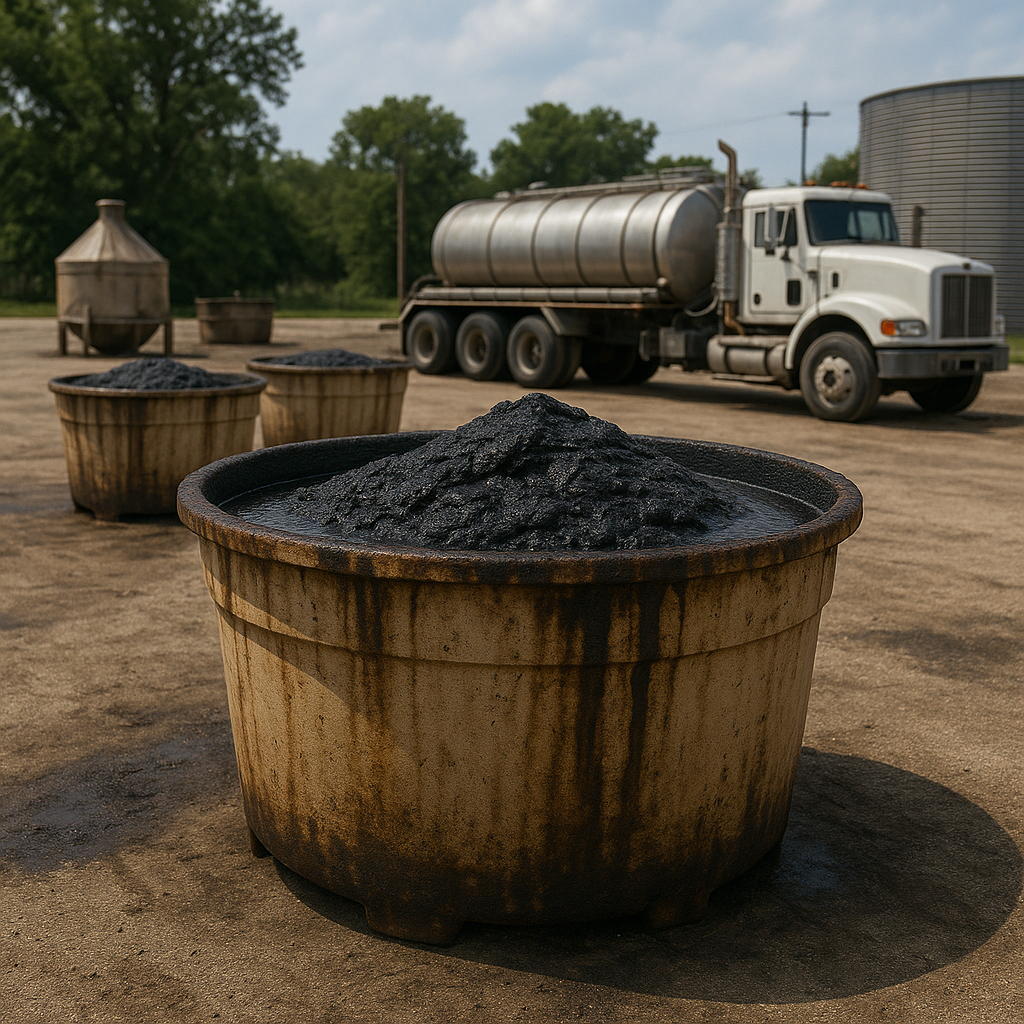
Sludges from physico-chemical treatment containing hazardous substances (19 02 05*) are a high-risk type of industrial waste resulting from water purification and chemical neutralization processes.
Proper hazardous waste management includes identifying the waste, assessing risks, and applying the most effective treatment methods.
Environmental servicing of enterprises managing such waste involves regular monitoring, documentation, and process audits.
Storage of hazardous waste must ensure full containment with leak-proof systems to avoid contamination of soil and air.
Transportation of hazardous waste must be performed with certified vehicles and trained personnel, following strict safety regulations.
Processing of hazardous waste may involve stabilization, encapsulation, or advanced filtration to reduce toxicity and mobility.
Key risks include:
contamination of groundwater
harmful emissions during poor treatment
logistics complexity and high handling costs
Competent handling of hazardous waste requires strict internal control, reporting systems, and cooperation with certified waste handlers.
Environmental support for enterprises helps reduce ecological risks, optimize waste processes, and ensure regulatory compliance.
Proper management of sludges supports environmental protection and the company’s sustainability goals.
Common steps for handling 19 02 05 sludges:
- hazardous waste management: classification, risk evaluation, oversight
- storage of hazardous waste: secure containment, monitoring
- transportation of hazardous waste: compliant logistics
- processing of hazardous waste: neutralization, stabilization
- handling of hazardous waste: documentation and adherence to standards
- environmental servicing of enterprises: audits, consulting, monitoring