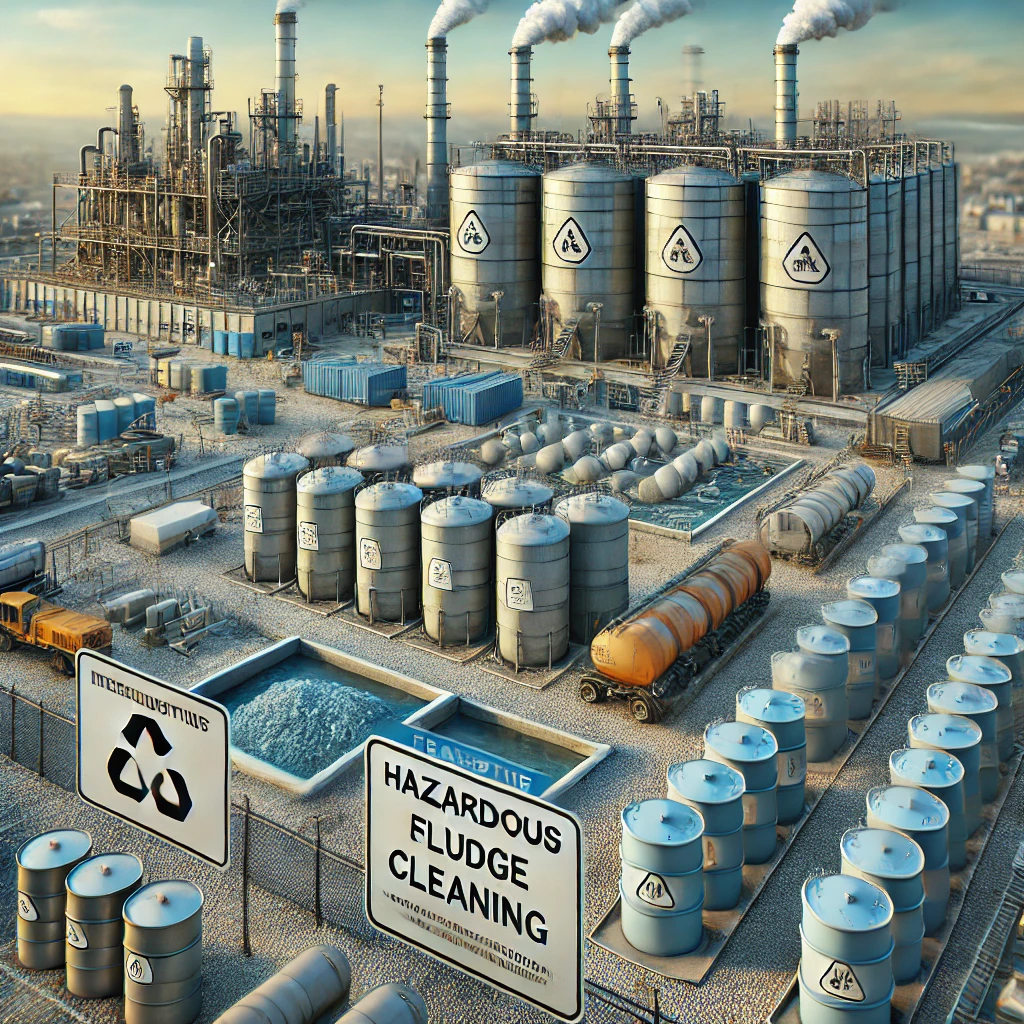
Sludge from flue gas cleaning (code 19 11 07*) is generated during gas purification processes at industrial facilities. These wastes contain hazardous substances such as heavy metals, acids, dioxins, and other toxic compounds that require specialized handling methods.
Effective hazardous waste management for this category involves monitoring sludge composition, determining toxicity levels, and applying safe treatment methods. Preventing their release into the air, soil, or water bodies is crucial.
The main types of hazardous waste in this category include:
- residues from wet gas purification systems
- waste containing toxic sulfur compounds, heavy metals, and acids
- dust residues formed during chemical flue gas treatment
- sludge waste containing filtering materials and neutralized substances
Proper hazardous waste handling for sludge from flue gas treatment requires strict control and advanced processing technologies. Many sludge types contain substances that may react chemically or cause secondary pollution.
Hazardous waste storage for these materials must be conducted in sealed containers to prevent toxic leaks into the environment. Controlling moisture levels is particularly important since some sludge may react with air or water.
Hazardous waste transportation for sludge must adhere to strict safety regulations. Specially designed tankers or containers should be used to prevent liquid leaks and toxic particle dispersion.
Hazardous waste recycling from flue gas cleaning includes chemical neutralization, thermal treatment, and the extraction of valuable components. Some recovered substances can be reused in industrial processes after purification.
Environmental servicing for enterprises that operate gas purification systems should include monitoring sludge formation, implementing effective neutralization methods, and reducing the level of harmful emissions.
The main risks of improper hazardous waste handling for sludge from flue gas treatment include:
- potential water contamination with toxic components
- release of fine hazardous dust particles into the air
- chemical reactions when sludge interacts with air or water
- toxic effects on workers due to exposure to harmful compounds
Modern hazardous waste recycling technologies help significantly reduce environmental impact and ensure the safe handling of these waste materials.