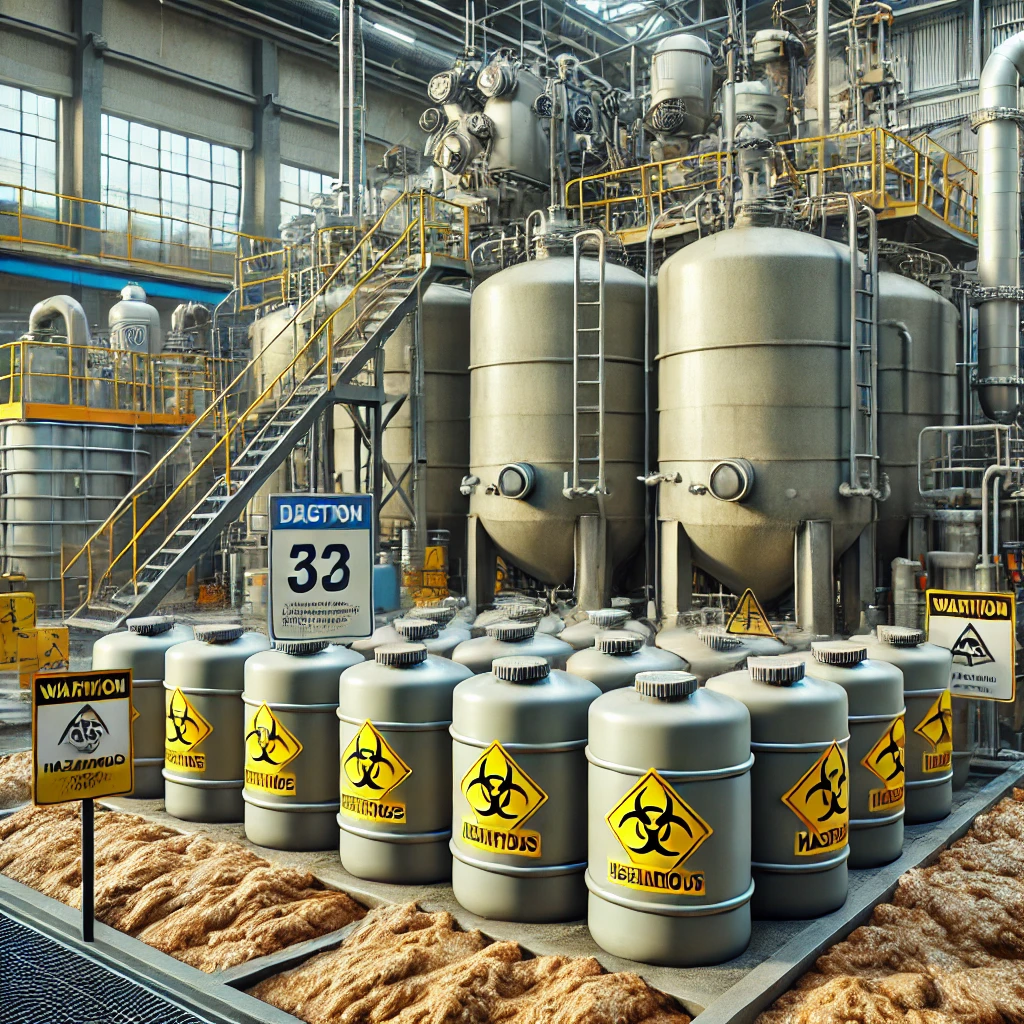
Sludge from other treatment of industrial wastewater containing hazardous substances (code 19 08 13*) is produced during the treatment of wastewater from chemical, metallurgical, pharmaceutical, and other industries. These wastes may contain heavy metals, toxic compounds, organic toxins, and reagent residues.
Hazardous waste management of sludge begins with classification and toxicity assessment. Each sludge type requires specific handling and treatment methods.
Typical sludge components include:
- sediments after filtration or flocculation of contaminated water
- neutralized residues from acids and alkalis
- metal concentrates extracted during water purification
- multi-component mixtures with paints, oils, and synthetic substances
Hazardous waste handling for sludge requires sealed equipment, designated reservoirs, and automated monitoring systems.
Hazardous waste storage of sludge should take place under controlled conditions — in waterproof, sealed containers to prevent soil and groundwater contamination.
Hazardous waste transportation for sludge requires reinforced tankers or containers to prevent leaks.
Hazardous waste recycling of sludge may include thermal processing, drying, stabilization, or recovery of valuable substances.
Environmental servicing of enterprises generating such sludge must involve wastewater monitoring, filtration system upgrades, and preventive maintenance.
Key risks of mismanagement include:
- toxic substances entering surface or agricultural waters
- air contamination with volatile organic compounds
- heavy metal accumulation in ecosystems
- health hazards for personnel in contact with untreated sludge
Safe processing of industrial sludge is essential for enterprise sustainability and environmental protection.