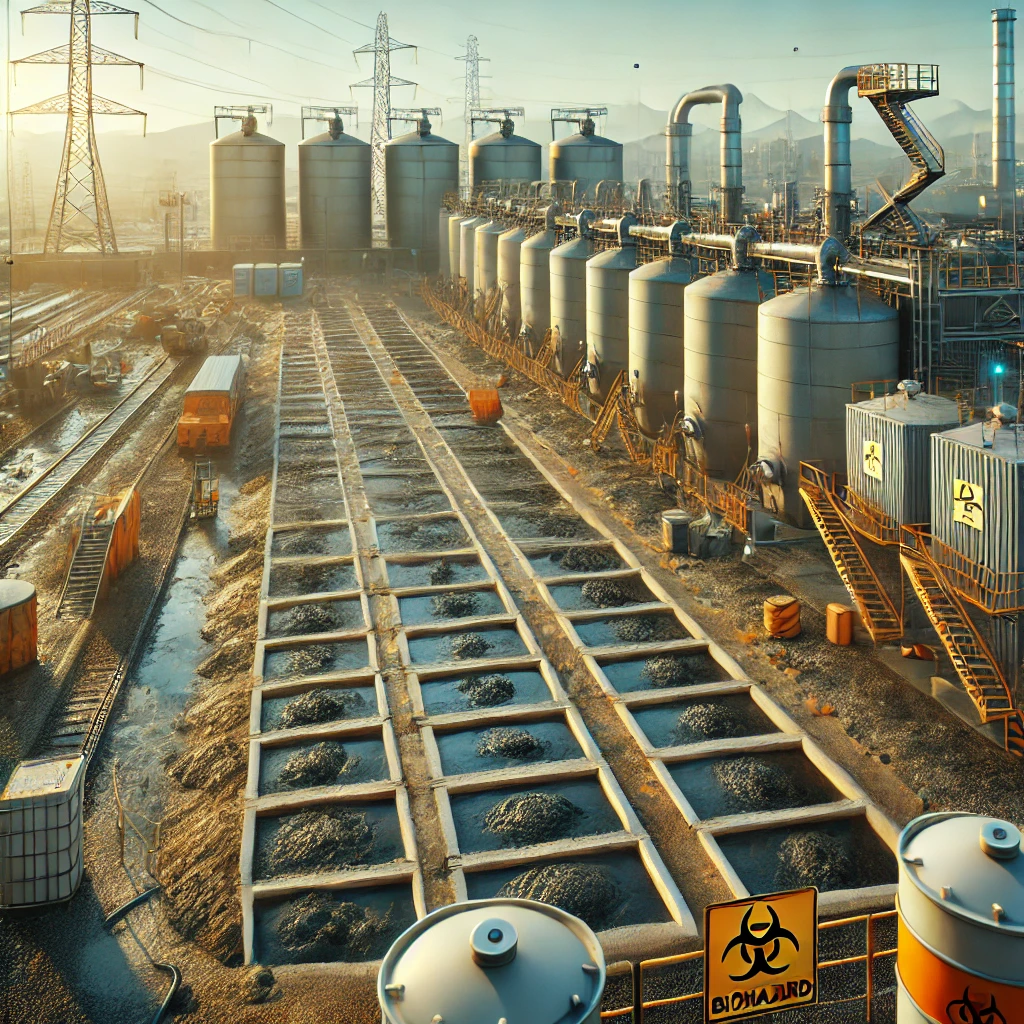
Sludge from biological treatment of industrial wastewater containing hazardous substances (code 19 08 11*) is a byproduct of processes where microorganisms decompose organic pollutants. In industrial settings, such sludge often accumulates toxins, heavy metals, surfactants, phenols, and other hazardous compounds.
Effective hazardous waste management for this category requires comprehensive control at every stage — from sludge generation to processing or storage — to minimize environmental threats and protect workers.
Typical components of such sludge include:
- residual biomass from activated sludge with embedded pollutants
- partially decomposed organic materials
- traces of toxic compounds that resist breakdown
- harmful substances absorbed by bioparticles
Hazardous waste handling of biological sludge must consider its biochemical instability and potential for undesirable chemical reactions.
Hazardous waste storage should be conducted in sealed containers or on lined drying beds to prevent leaks into soil or groundwater.
Hazardous waste transportation requires vented, leak-proof tankers or containers to avoid biogas accumulation and microbial contamination.
Hazardous waste recycling may involve lime stabilization, composting with additives, or drying and processing in controlled facilities.
Environmental servicing for enterprises producing such sludge must include chemical analysis, bioreactor upgrades, and use of biological filtration systems.
Main risks of improper handling include:
- biogas buildup with explosion hazards
- contamination of soil and water with dangerous microbes
- unpleasant odors and air pollution
- health risks for personnel exposed to untreated sludge
Proper sludge processing after biological treatment is essential for safe industrial operations and ecological sustainability.