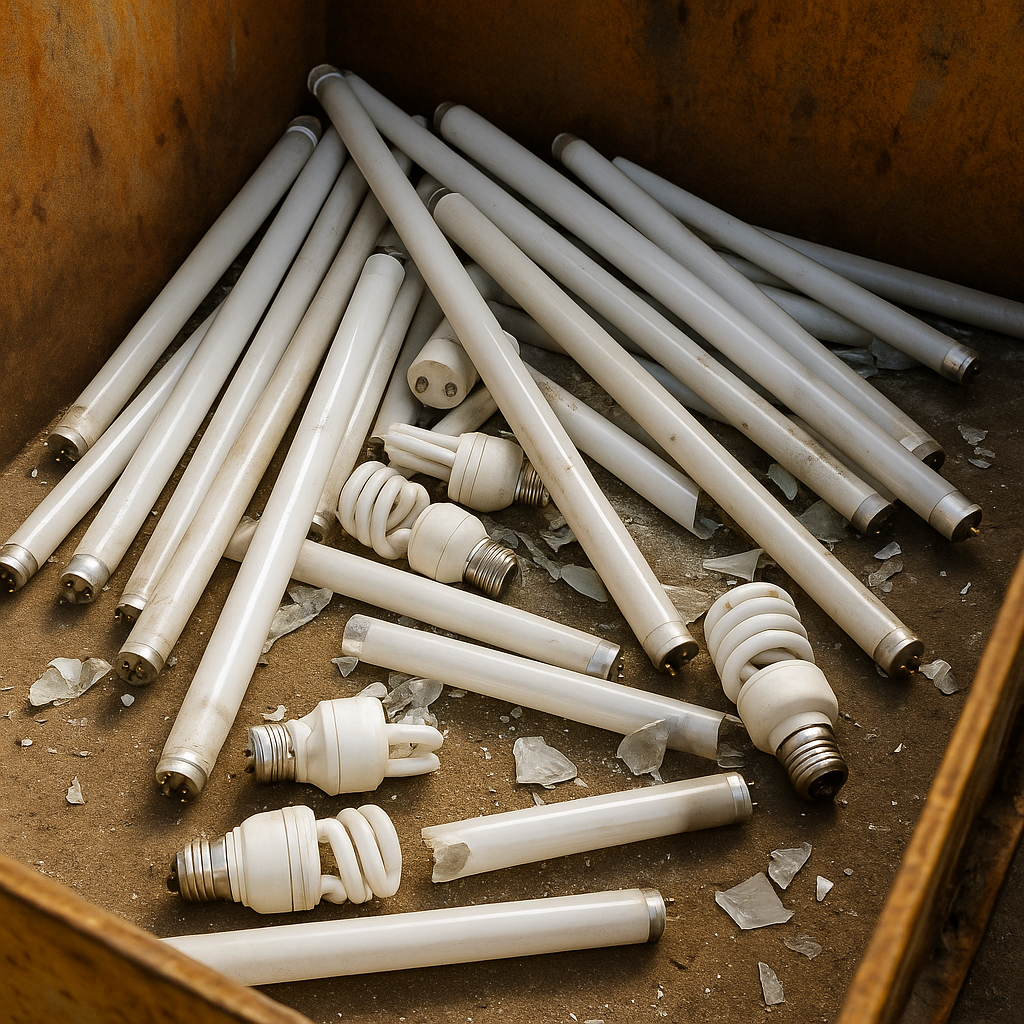
Fluorescent lamps and other mercury-containing waste (16 12 37, 20 01 21)* are hazardous due to the toxicity of mercury, even in trace amounts.
Hazardous waste management starts with the collection and sorting of lamps and parts in sealed containers.
Handling of hazardous waste includes restricting access, monitoring packaging integrity, and preventing breakage.
Environmental servicing of enterprises involves:
- auditing storage sites
- monitoring permissible storage periods
- preparing reports for environmental regulators
Storage of hazardous waste occurs in ventilated, moisture-protected rooms.
Transportation of hazardous waste requires sealed, certified containers and full documentation.
Processing of hazardous waste involves vacuum demarcation and separation of glass and metals.
Key risks include:
- mercury vapor release
- soil and water contamination from broken lamps
- chronic poisoning of workers and nearby residents
Responsible handling of hazardous waste prevents environmental disasters and protects communities.
Consistent environmental servicing of enterprises ensures compliance with global standards.