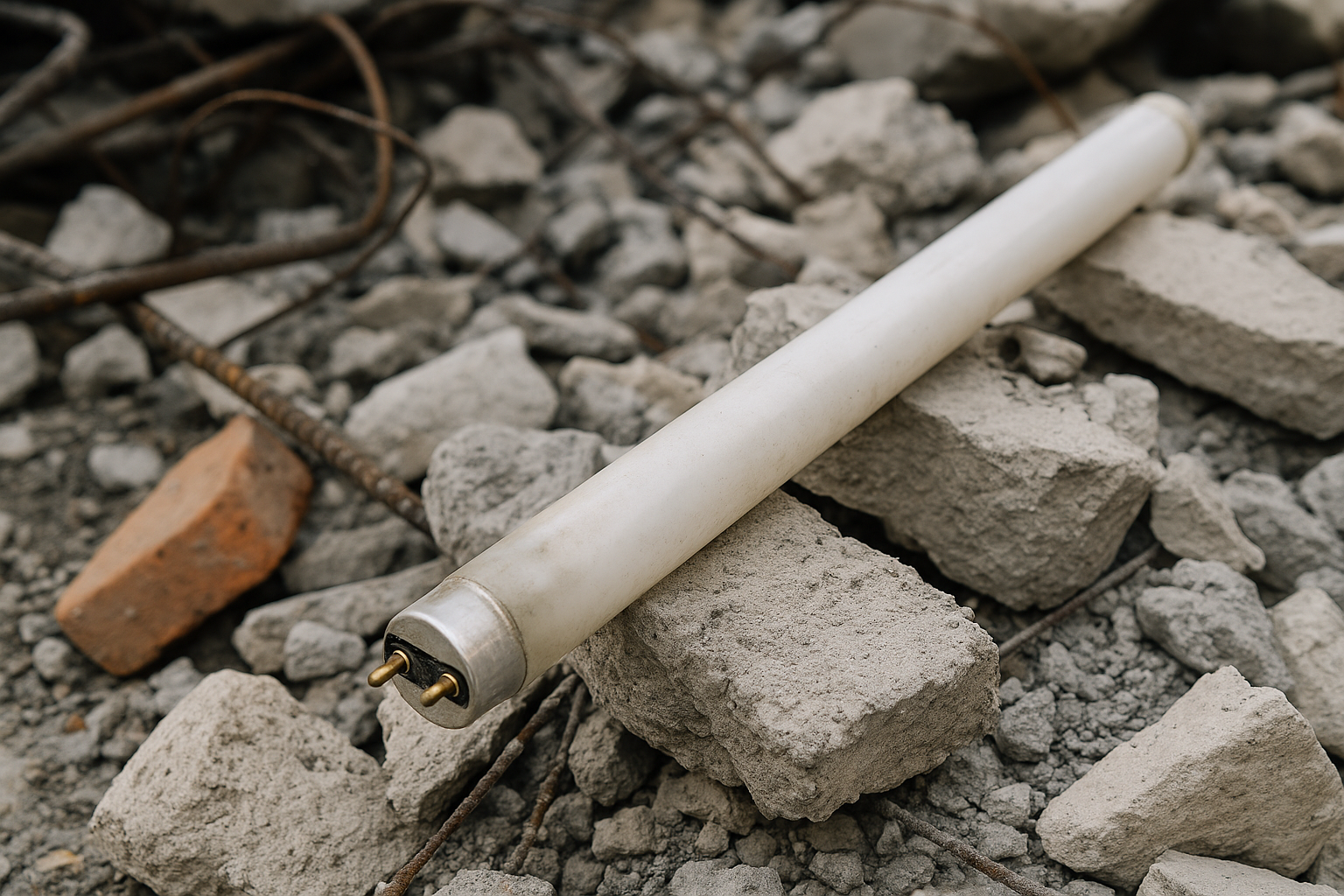
Components of demolition waste containing mercury (code 16 12 33*) require strictly regulated handling. Even trace amounts of mercury in construction debris pose serious risks to the environment and public health.
These types of waste may include:
- old thermometers: with glass housing and mercury capsules
- switches and sensors: from outdated electrical systems
- fluorescent elements: integrated into lighting infrastructure
- construction materials: that have absorbed mercury over time
Proper management of hazardous waste starts with identifying mercury-containing items at demolition sites. This process must involve qualified personnel and certified detection tools.
Handling hazardous waste must comply with national and international regulations. Enterprises are responsible for planning that includes:
- waste separation: by contamination level and material type
- leakage control: especially from legacy heating and lighting systems
- worker protection: personal protective equipment and proper training
Ecological maintenance of demolition companies means more than just removing debris. It includes full environmental oversight to reduce risks and build public trust.
Storage of hazardous mercury-containing waste must occur in sealed, multi-layer containers. Storage facilities should be certified and regularly inspected.
Transportation of hazardous waste requires licensed logistics. Every stage — from loading to arrival at the processing facility — must be documented.
Processing hazardous waste is only permitted at licensed facilities. With mercury, the goal is total neutralization without secondary environmental contamination.