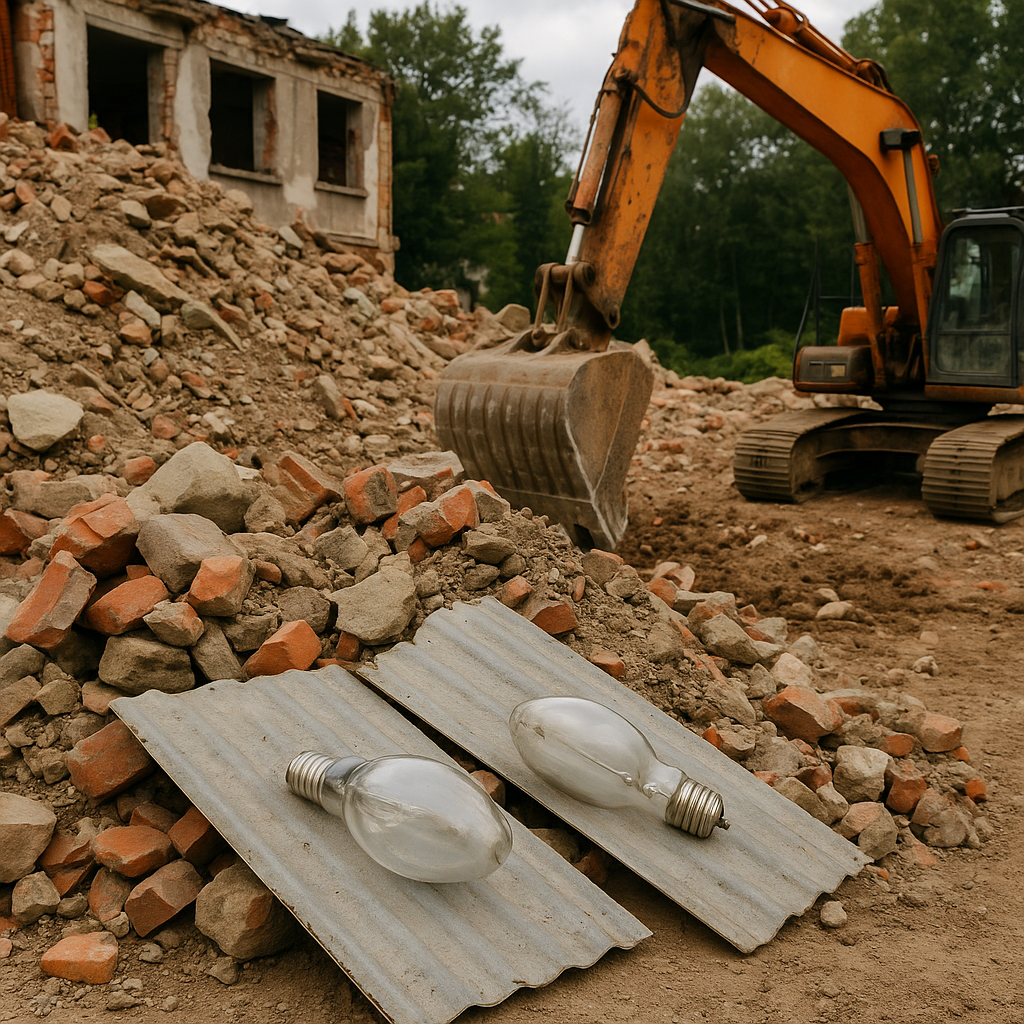
Construction and demolition waste containing mercury (17 09 01)* is produced when dismantling buildings with mercury-based materials like thermostats, fluorescent lamps, and coatings.
Hazardous waste management starts with identifying potential mercury sources before dismantling operations begin.
Handling of hazardous waste requires expert assessment, containment strategies, and controlled removal of toxic materials.
Environmental servicing of enterprises includes:
- identifying risk zones
- monitoring air for mercury vapors
- maintaining detailed handling logs
Storage of hazardous waste should involve sealed, chemical-resistant containers to prevent vapor release.
Transportation of hazardous waste must use specialized vehicles with locking systems, ventilation, and safety monitoring.
Processing of hazardous waste may involve deactivation, stabilization, or high-temperature destruction with emissions control.
Primary risks:
- inhalation of mercury vapor
- soil contamination from leakage
- worker exposure during improper handling
Strict internal protocols and tailored site safety standards ensure effective handling of hazardous waste.
Long-term environmental servicing of enterprises guarantees safe operations and legal compliance during demolition projects.