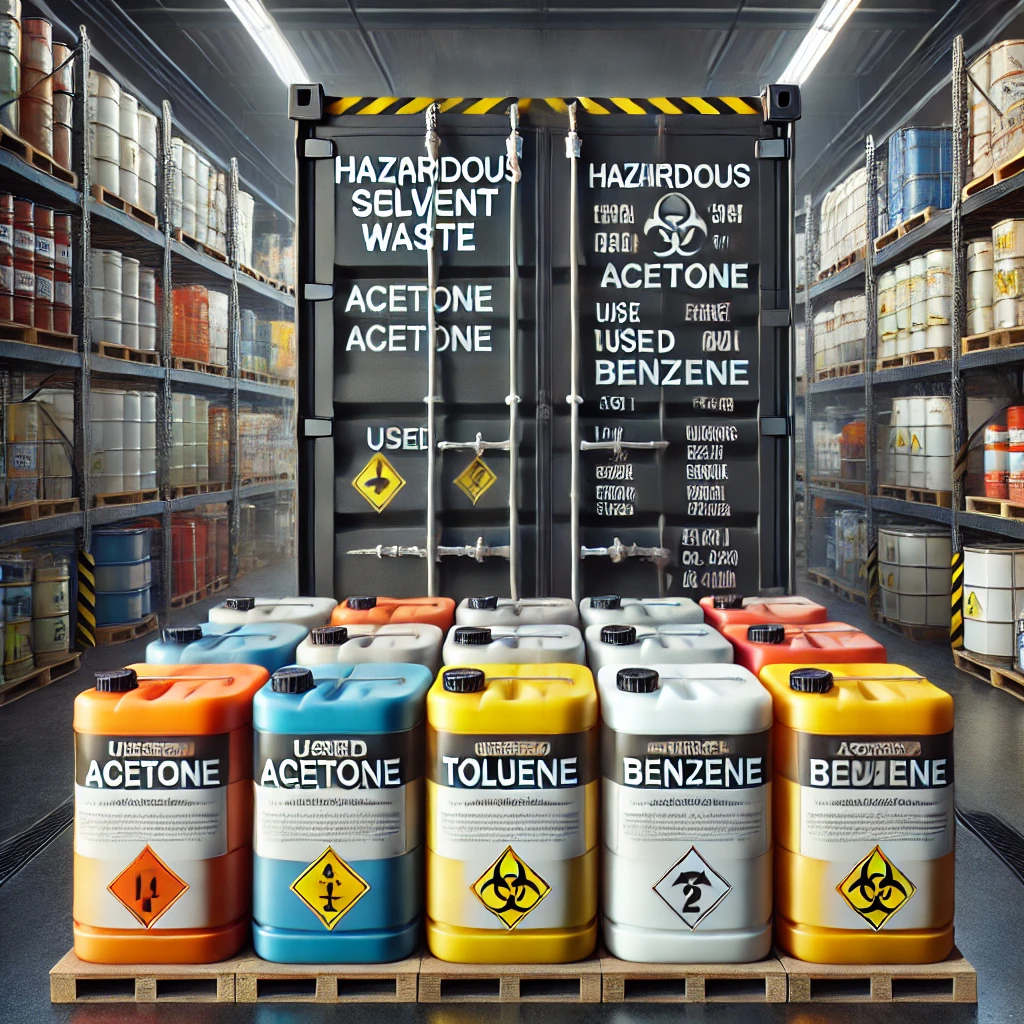
Solvents (code 20 01 13*) are among the most common hazardous waste materials in industries, construction, healthcare, and households. They contain volatile organic compounds (VOCs) that can cause severe air, soil, and water pollution, posing health risks to humans.
Effective hazardous waste management for solvents includes proper identification, separation by type, and safe recycling. A major concern is the toxicity and flammability of many solvents, requiring special storage conditions.
The main types of hazardous solvent waste include:
- residues of organic solvents (acetone, toluene, benzene)
- used paint and lacquer thinners
- industrial and medical cleaning fluid waste
- mixed solvents from degreasing and cleaning processes
Proper hazardous waste handling of solvents must comply with environmental standards. These substances should never be disposed of in sewage systems or sent to regular landfills, as they contain toxic components that can contaminate the environment.
Hazardous waste storage for solvents requires airtight, chemically resistant containers. Well-ventilated storage areas are essential to prevent the accumulation of vapors, which can cause poisoning or create an explosion hazard.
Hazardous waste transportation for solvents must be conducted using specialized vehicles with appropriate labeling and sealed containers. This ensures the prevention of spills and toxic vapor emissions during transport.
Hazardous waste recycling for solvents involves processes such as purification, distillation, or chemical neutralization. Many organic solvents can be reused after specialized treatment, reducing their environmental impact.
Environmental servicing for businesses that work with solvents includes implementing monitoring programs for chemical use, ensuring safe disposal, and introducing less toxic alternatives.
The main risks of improper hazardous waste handling for solvents include:
- air pollution from volatile organic compounds
- poisoning of workers due to inhalation of toxic vapors
- fire or explosion risks when exposed to open flames
- contamination of soil and water with hazardous chemicals
Following modern hazardous waste recycling methods significantly reduces environmental risks and ensures the safe use of solvents in industrial processes.