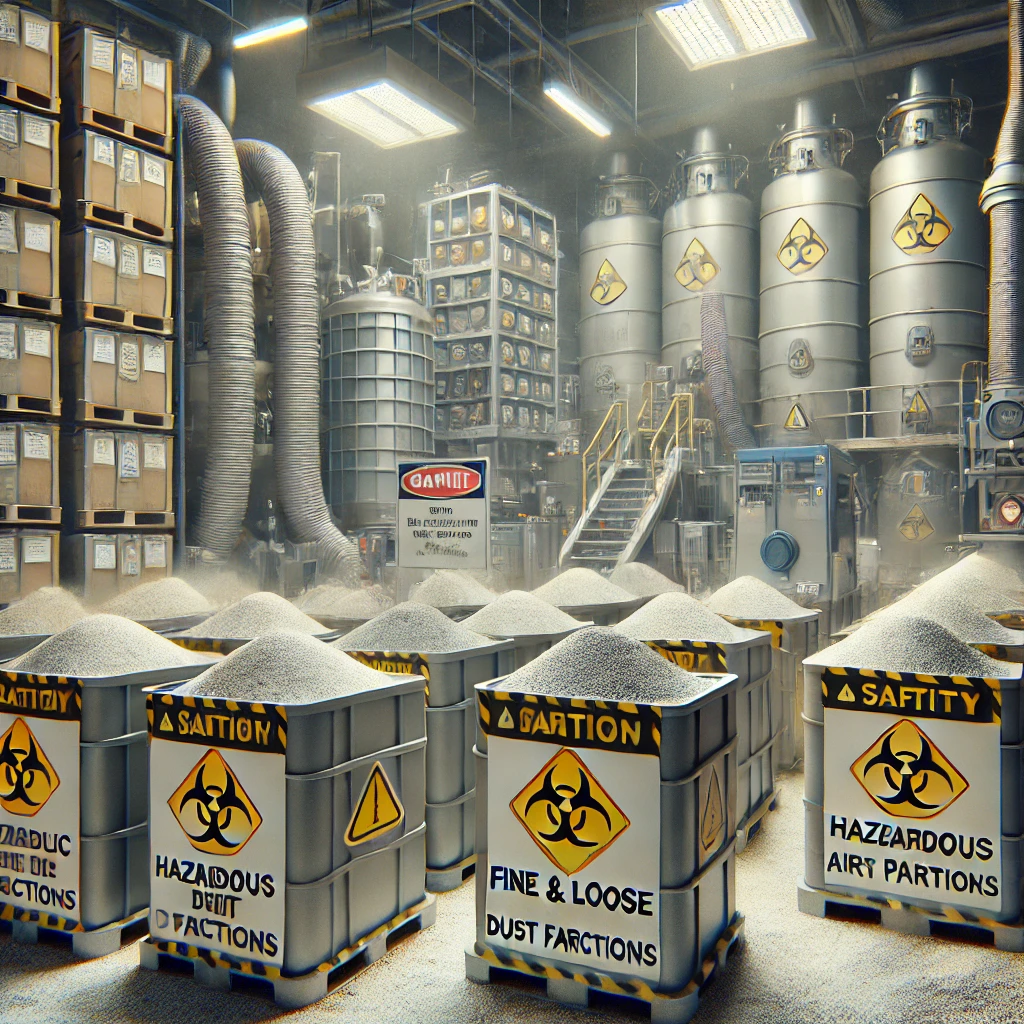
Fine and loose dust fractions containing hazardous substances (code 19 10 03*) are generated during mechanical crushing, grinding, sorting, or drying of various materials. These particles often contain harmful additives, heavy metals, toxic chemicals, and micro-substances that pose risks to both human health and the environment.
Effective hazardous waste management for this type starts with controlling the processes that generate such waste. It's critical to prevent the spread of fine particles into the air and avoid contact with soil or water.
The most dangerous types of dust and loose waste include:
- dust from metal, wood, or composite materials containing toxic elements
- residues from abrasive treatments such as slag or grinding dust
- loose plastic or rubber fractions contaminated with oils, solvents, or acids
- micro-particles generated during thermal or chemical material processing
Proper hazardous waste handling for such fractions requires filtration systems, dust capture equipment, sealed containers, and automated dust collection technologies.
Hazardous waste storage of dust-like substances should be in airtight containers or sealed packaging to prevent dispersion and release. Moisture content and flammability must be monitored for certain fractions.
Hazardous waste transportation for dusty materials must be done using closed, hermetic containers clearly labeled for hazardous classification. Stability during transport is essential to prevent spills or dispersal.
Hazardous waste recycling for fine and loose fractions may include sintering, pressing, inerting, or thermal treatment. Some components may be converted into secondary raw materials after decontamination.
Environmental servicing for facilities that generate such waste must include identifying dust sources, regular diagnostics of equipment, timely filter replacement, and implementation of safe technological solutions.
The main risks of improper handling of dusty hazardous waste include:
- poisoning of workers due to inhalation of toxic particles
- contamination of the atmosphere with fine hazardous dust
- risk of self-ignition when exposed to air or moisture
- cross-contamination of other waste fractions
Modern approaches to managing hazardous dust ensure worker safety, environmental protection, and optimized industrial operations.