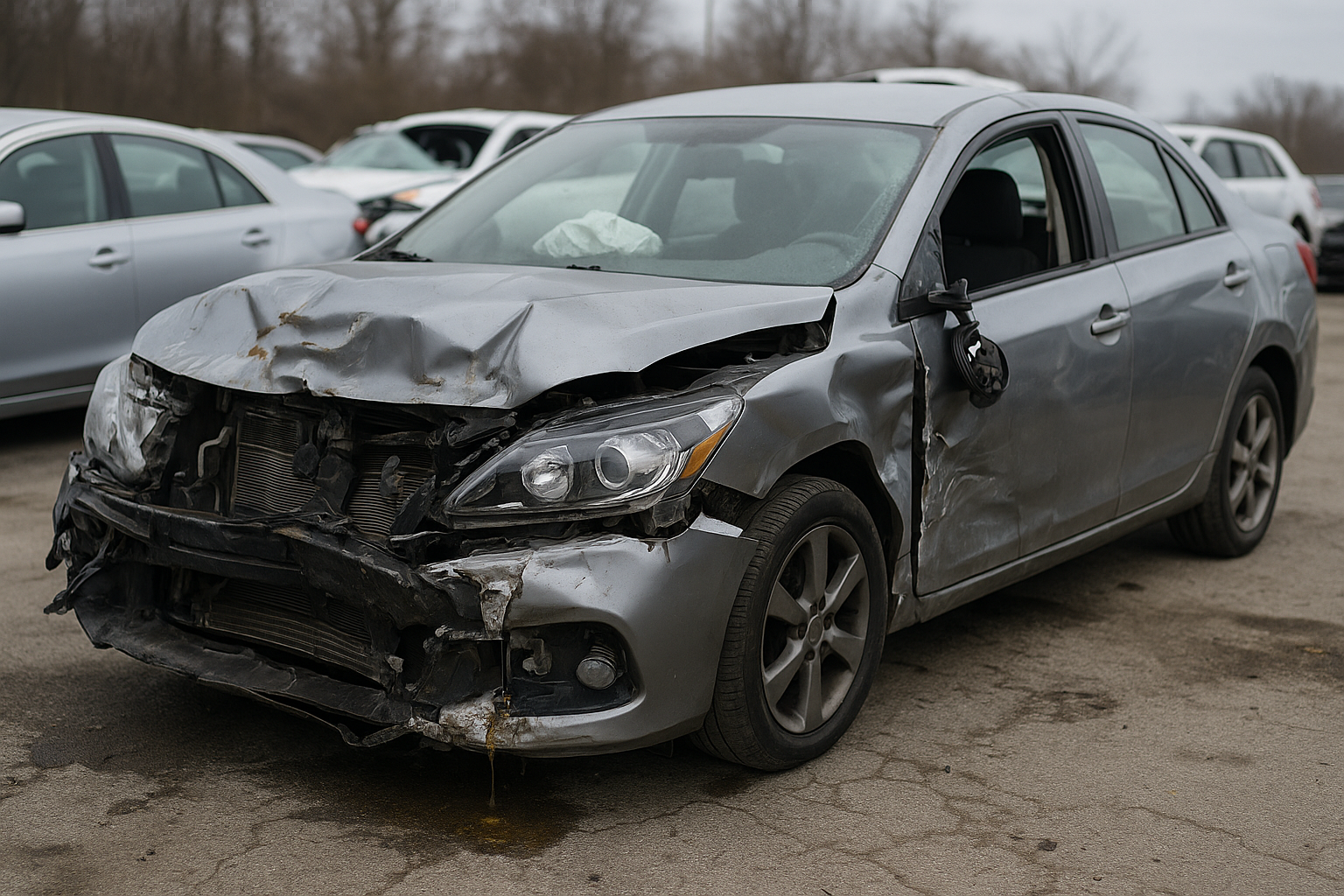
Damaged vehicles (16 12 52)* often contain hazardous waste such as fuel residues, oils, brake fluids, batteries, filters, airbags, and toxic electronics.
Hazardous waste management requires initial inspection and segregation of all components containing dangerous substances.
Handling of hazardous waste in vehicles includes draining fluids, dismantling toxic elements, and labeling each hazardous part.
Environmental servicing of enterprises in this area includes:
- monitoring vehicle storage areas
- tracking contamination risk
- compliance reporting and audits
Storage of hazardous waste from vehicles must be done on sealed surfaces with drainage and roofing to prevent spills.
Transportation of hazardous waste should be handled via enclosed carriers or tow trucks equipped with spill control platforms.
Processing of hazardous waste involves:
fluid treatment via filtration or thermal systems
battery recycling by separating acid, lead, and plastics
airbag deactivation before further handling
Key risks:
- fluid leaks contaminating soil
- ignition from electrical components
- improper storage on standard parking sites
Effective handling of hazardous waste from vehicles requires trained staff, verified workflows, and documentation.
Ongoing environmental servicing of enterprises working with wrecked cars protects communities and supports legal compliance.