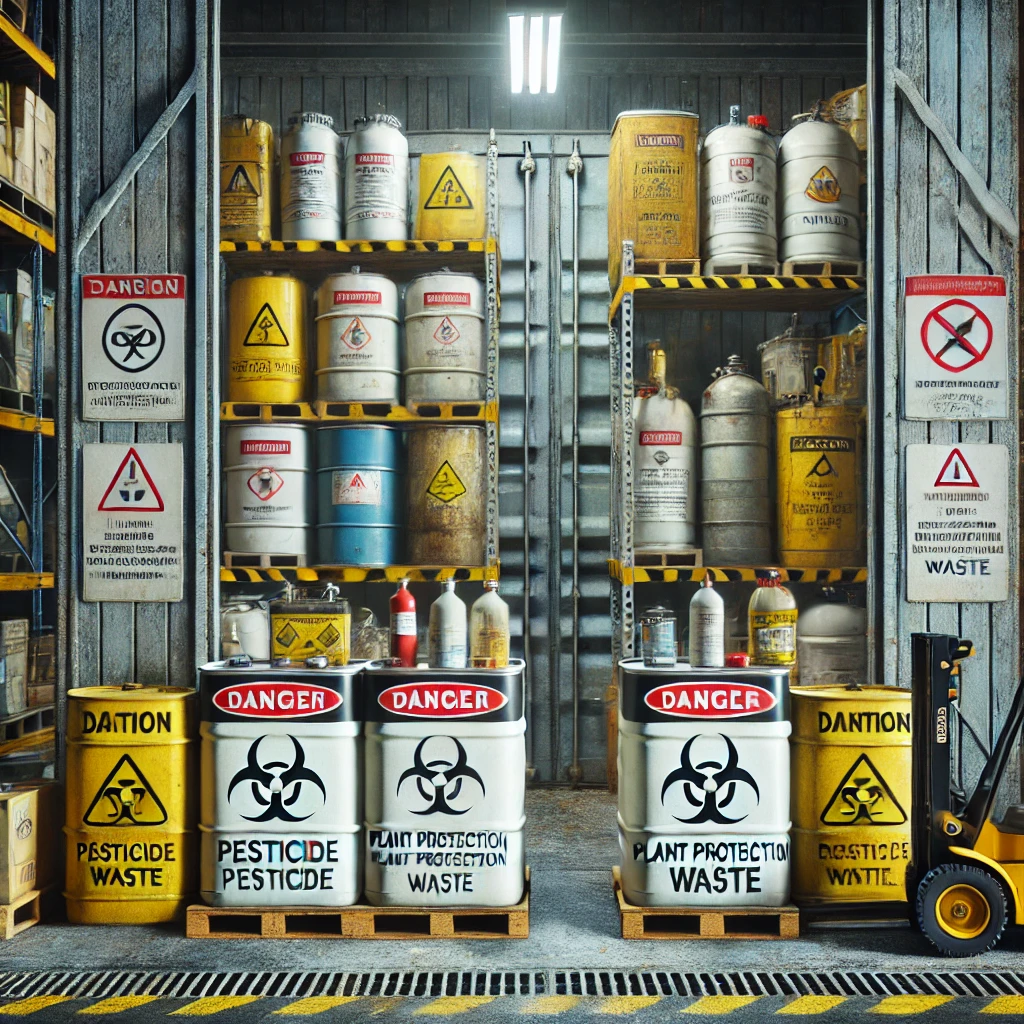
Pesticides and plant protection products (code 20 01 19*) are widely used in agriculture, but improper storage and disposal can cause significant environmental and health hazards. These substances contain toxic compounds that, when released into soil or water, can accumulate in ecosystems and pose risks to living organisms.
Effective hazardous waste management in the agricultural sector requires strict control over storage, transportation, and further recycling of these chemical substances. It is crucial to prevent uncontrolled dumping of pesticide residues and their packaging into the environment.
The main types of hazardous waste in this category include:
- outdated or banned pesticides
- residues of plant protection products after spraying
- empty pesticide and agrochemical containers
- expired or mixed chemical products
Proper hazardous waste handling of such materials must comply with strict environmental regulations. Ensuring their containment and avoiding the mixing of different chemicals is essential to prevent dangerous reactions.
Hazardous waste storage for pesticides must take place in specially designated areas equipped with leak-proof containment systems. Storage containers should be sealed and labeled according to the type of substance.
Hazardous waste transportation in this category requires special precautions. Pesticides must be transported in sealed containers with strict adherence to safety regulations to prevent spills or toxic emissions.
Hazardous waste recycling for pesticides involves multiple stages: neutralizing active substances, destroying contaminated packaging, and repurposing recovered materials for industrial use. These processes help reduce environmental damage.
Environmental servicing for agricultural enterprises involves developing effective programs for the collection and disposal of pesticides. Proper monitoring and storage of these chemicals significantly reduce risks to both the environment and human health.
The main risks of improper hazardous waste handling in this category include:
- contamination of soil and groundwater
- poisoning of humans and animals through exposure to toxic substances
- pesticide accumulation in the food chain
- high risk of fire or chemical explosions due to improper storage
Following environmental standards and modern hazardous waste recycling methods help minimize damage and ensure safe pesticide management.