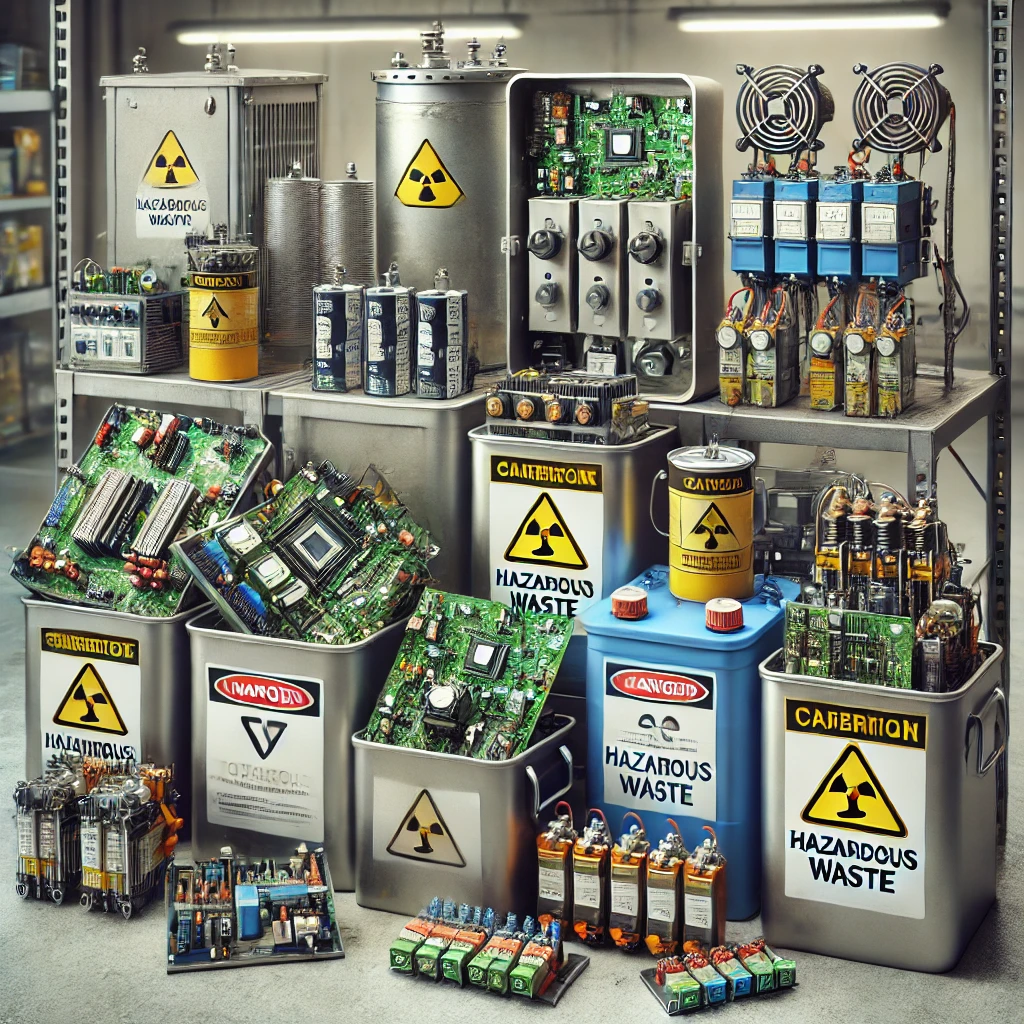
Modern electrical equipment contains many components that turn into hazardous waste after they become obsolete (except for 20 01 21* and 20 01 23*). Besides batteries and fluorescent lamps, there are numerous other electronic components that require a specialized approach to handling.
The category of "other hazardous waste from electrical equipment" includes:
- control boards and processors
- electronic modules with traces of chemicals
- high-voltage capacitors
- transformers containing hazardous fluids
- relays and switching devices with toxic metals
Proper hazardous waste management starts with identification and sorting. It is crucial to separate waste that contains heavy metals, polymers, and chemically active elements to prevent environmental pollution.
The next step is the storage of hazardous waste. Specialized containers must be used to prevent toxic leaks and contact with other materials. Improper storage can lead to environmental disasters and workplace hazards.
The transportation of hazardous waste is carried out using certified vehicles that meet safety requirements. Proper labeling of containers and documentation confirming the waste's composition and origin are essential.
Hazardous waste recycling helps minimize the harmful impact of electrical equipment on the environment. This process includes extracting valuable materials such as copper, silver, and gold, as well as neutralizing toxic components.
Environmental servicing for businesses plays a key role in preventing the accumulation of hazardous waste. This involves implementing separate collection programs for electronic waste, training personnel, and developing ecological work standards.
The main risks of improper hazardous waste handling include:
- contamination of soil and water with toxic substances
- accumulation of hazardous gases when stored at high temperatures
- risk of fire due to short circuits in components with residual charge
To avoid these risks, businesses must carefully control hazardous waste management processes. Partnering with reliable companies specializing in environmental servicing for enterprises can help minimize risks and ensure safety.
Adhering to environmental regulations and safe handling principles not only reduces negative impacts on nature but also promotes the reuse of valuable resources contained in electrical equipment.