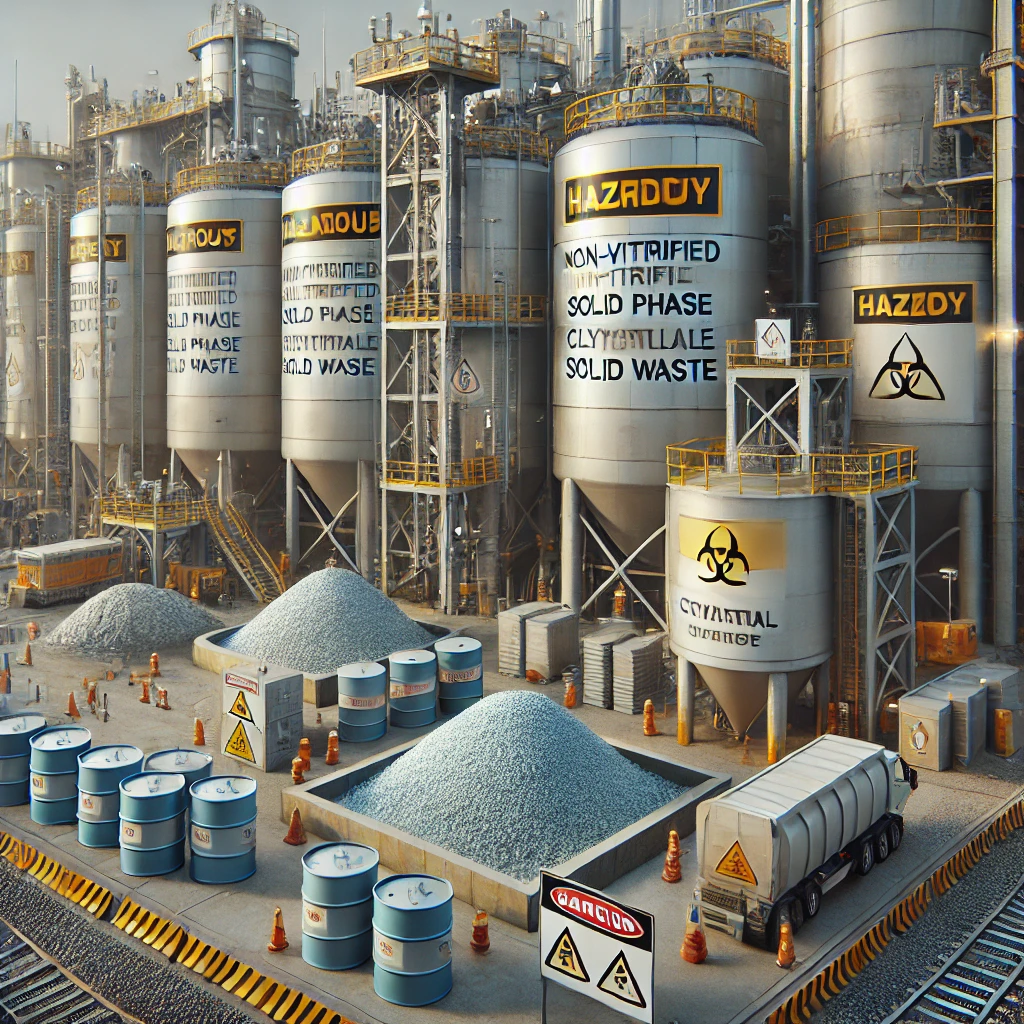
Non-vitrified solid phase and crystalline solid phase (code 19 04 03*) originate from chemical, thermal, or physico-chemical processes. These wastes may contain persistent pollutants and heavy metals.
Hazardous waste management requires proper analysis of structure and content. Non-vitrified materials are less stable, while crystalline forms concentrate toxic substances.
Such waste may contain:
- heavy metals: lead, cadmium, chromium
- inorganic salts in solid phase
- thermal residue with embedded toxins
- chemically resistant impurities
Hazardous waste handling includes sampling, laboratory analysis, and determining neutralization strategies.
Hazardous waste storage must use sealed containers with dust and moisture protection.
Hazardous waste transportation requires labeling, resistant packaging, and proper documentation.
Hazardous waste recycling includes stabilization, encapsulation, vitrification, or chemical transformation.
Environmental servicing of facilities should involve monthly waste audits, sealing methods, and advanced treatment technologies.
Main risks:
- long-term soil and water pollution
- toxic emissions upon container damage
- uncontrolled buildup near industrial zones
- health hazards for workers and locals
Managing solid-phase hazardous waste is key to industrial ecological responsibility.