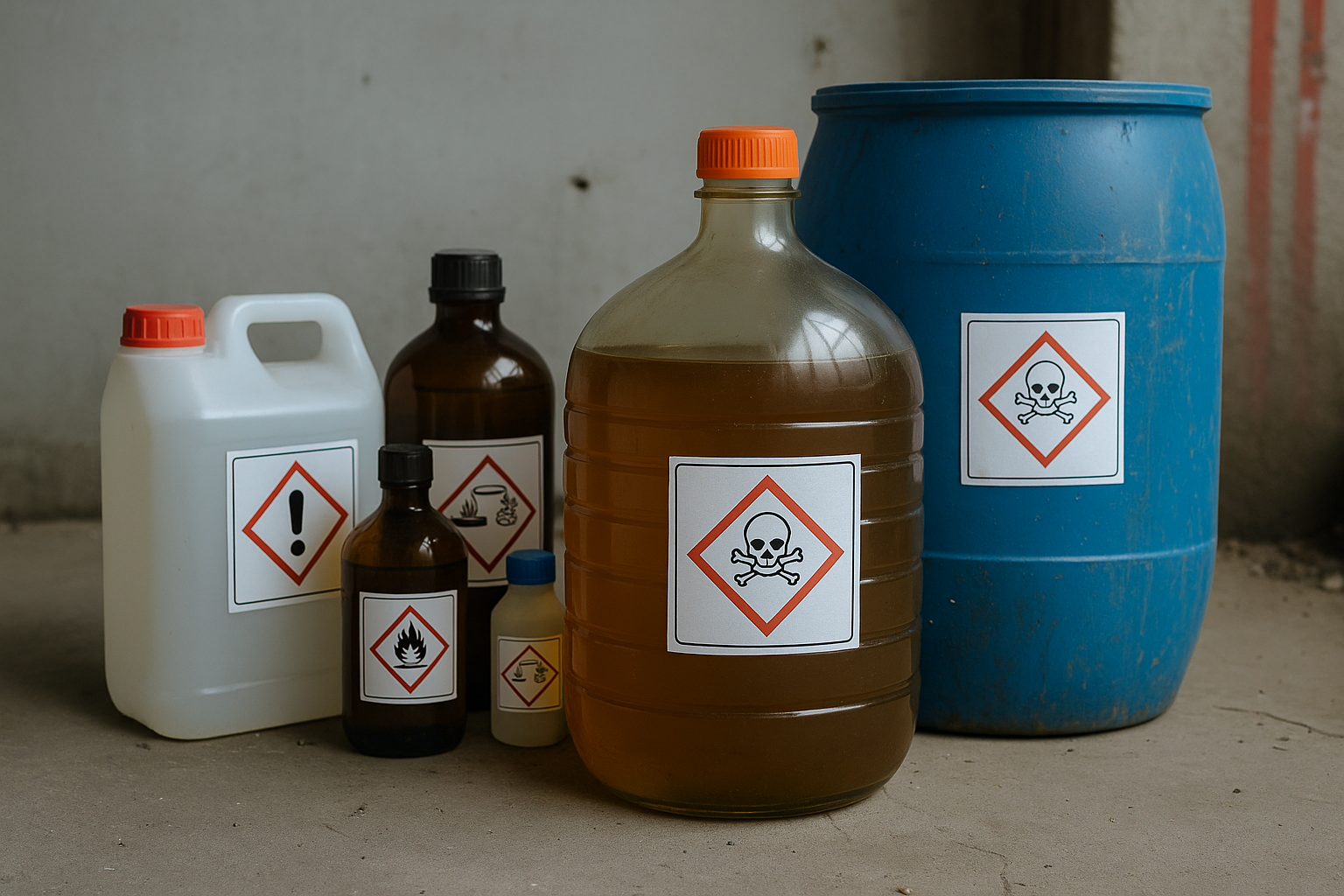
Chemical substances consisting of or containing hazardous components (18 02 05)* include acids, solvents, reagents, and toxic materials commonly found in laboratories, industry, and healthcare.
Hazardous waste management begins with chemical identification, hazard classification, and appropriate labeling.
Handling of hazardous waste involves controlled environments, protective gear, and ventilation systems to ensure safe conditions.
Environmental servicing of enterprises should include:
- warehouse audits
- inventory logs of chemical movement
- inspection of container integrity and compatibility
Storage of hazardous waste must take place in secure, ventilated rooms with temperature monitoring and restricted access.
Transportation of hazardous waste must comply with ADR standards, including:
- sealed, labeled containers
- trained personnel for transit
- no mixing of incompatible materials
Processing of hazardous waste may involve neutralization, thermal decomposition, filtration, or adsorption methods.
Key risks include:
- toxic exposure from leaks or vapors
- combustion on contact with air or moisture
- chemical degradation during long-term storage
Proper handling of hazardous waste requires trained staff, safety equipment, and regulatory tracking.
Environmental servicing of enterprises handling chemicals is vital to ensure compliance and prevent environmental hazards.