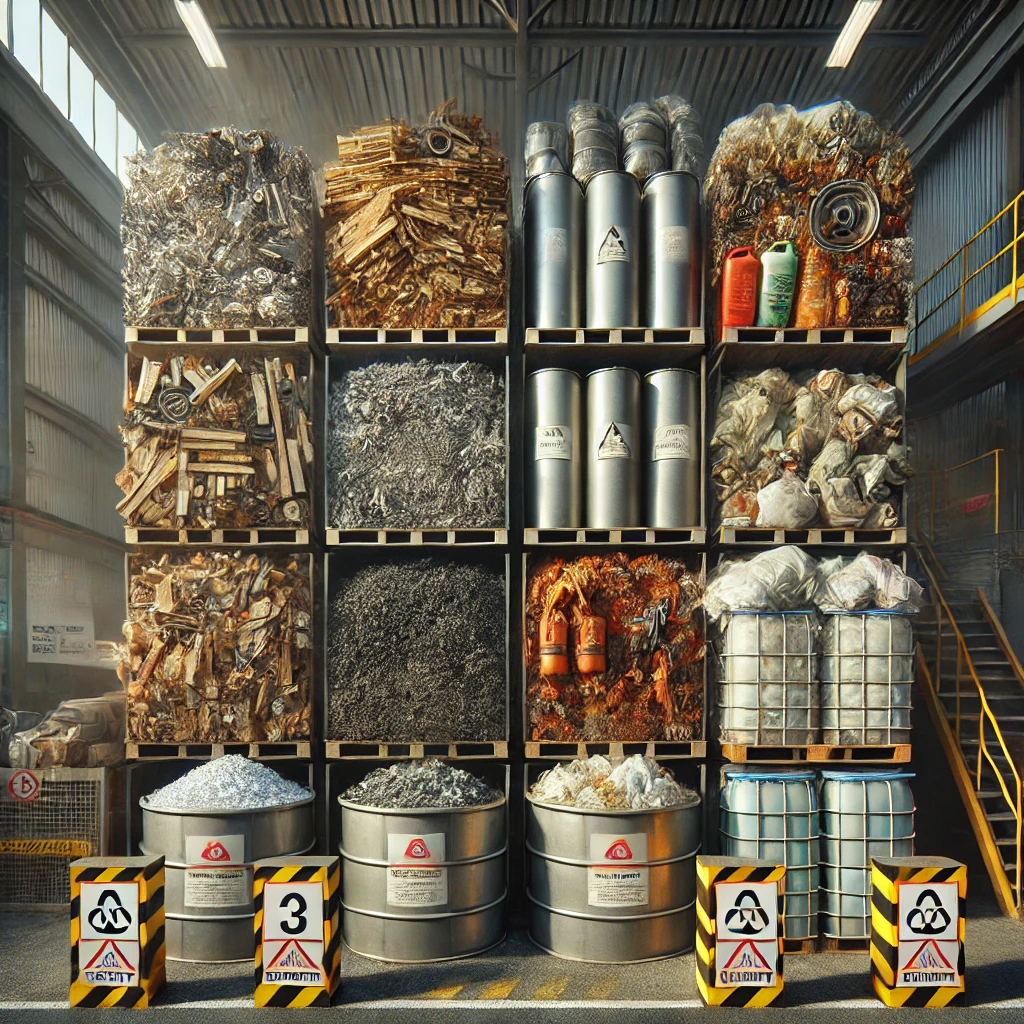
Other waste fractions containing hazardous substances (code 19 10 05*) are produced during the mechanical, chemical, or biological treatment of mixed waste. These fractions often consist of plastic, metal, textile, and wood components contaminated with hazardous chemicals.
Effective hazardous waste management of these fractions requires detailed analysis of their composition, risk assessment, and proper treatment methods. Improper handling can lead to unpredictable chemical reactions and environmental damage.
Common types of hazardous waste fractions include:
- plastic particles contaminated with oils, paints, or chemical agents
- wood treated with preservatives or industrial chemicals
- metal shavings containing residual lubricants or heavy metals
- textiles saturated with synthetic or toxic substances
Proper hazardous waste handling for such fractions involves sorting, labeling, and control at every stage—from collection to processing. These wastes are often reactive and must be handled with care.
Hazardous waste storage should be carried out in separate, sealed containers designed to prevent leaks or reactions. Compatibility of materials must be considered to avoid hazardous interactions.
Hazardous waste transportation of such fractions requires specialized containers resistant to chemicals and marked according to hazard classifications. Protection from moisture and air is crucial.
Hazardous waste recycling of these materials may include multiple stages: pre-treatment, chemical neutralization, thermal processing, and recovery of valuable components. These steps reduce the quantity of hazardous residue.
Environmental servicing for enterprises generating such fractions should focus on waste source tracking, implementing separation strategies, and updating processing equipment regularly.
The main risks of improper hazardous waste handling include:
- environmental contamination if stored outdoors
- chemical reactions causing fires or toxic emissions
- long-term ecological damage from persistent pollutants
- health risks for workers exposed to toxic materials
Modern approaches to hazardous waste recycling ensure safe processing and contribute to sustainable environmental protection.