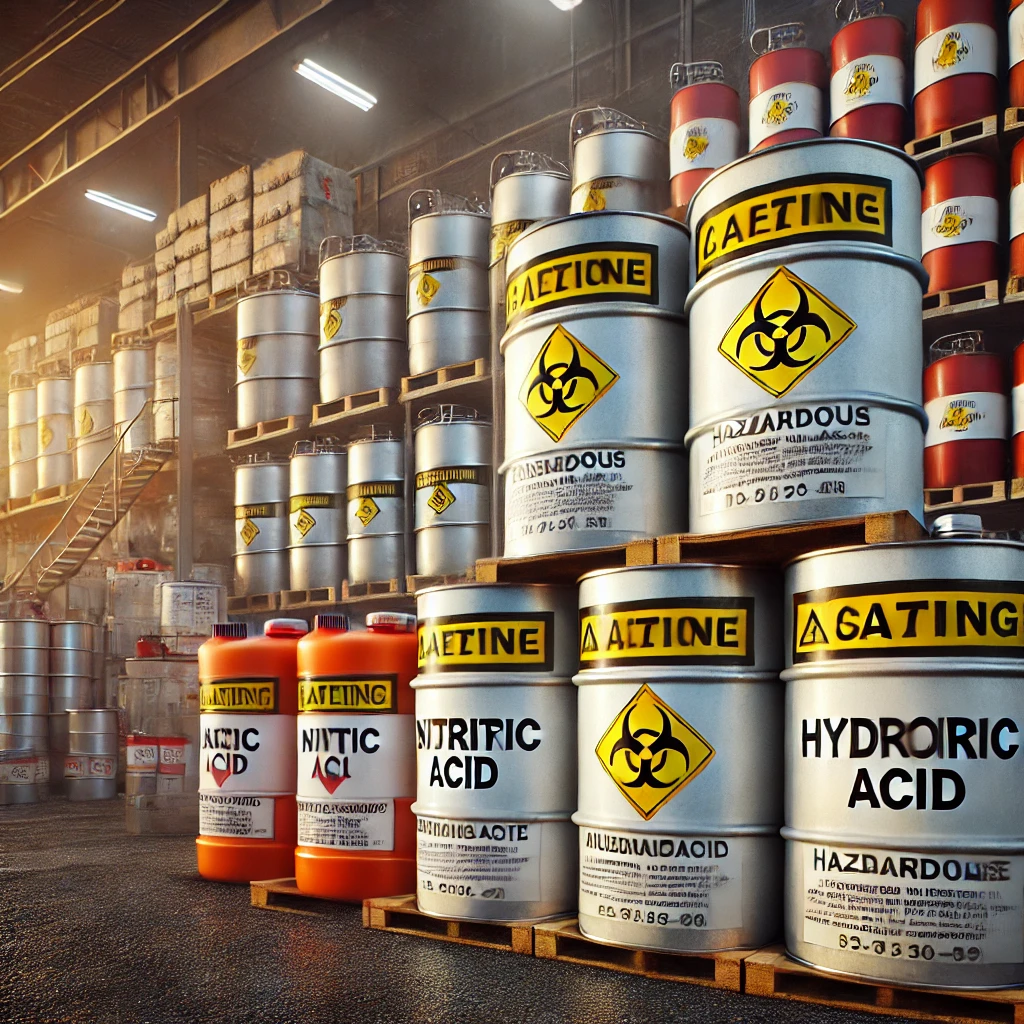
Corrosive acid solutions (code 20 01 14*) are widely used in various industrial processes, including metallurgy, chemical manufacturing, equipment cleaning, and laboratory research. These substances have a high reactivity and can cause significant environmental damage if not handled correctly.
Effective hazardous waste management for acid solutions requires strict control over their collection, storage, and recycling. Preventing acids from entering soil and water sources is crucial, as they can trigger dangerous chemical reactions and disrupt ecosystems.
The main types of hazardous acid waste include:
- spent solutions of sulfuric, nitric, hydrochloric, and phosphoric acids
- residues of acidic cleaning agents used in industrial processes
- acid-containing sludge and sediments
- used laboratory reagents
Proper hazardous waste handling for acids requires specialized equipment and protective measures. Direct contact with acids can cause severe chemical burns, damage to respiratory tissues, and hazardous reactions when combined with other substances.
Hazardous waste storage for acid solutions must be done in corrosion-resistant containers that prevent leaks of aggressive liquids. Proper labeling is essential to avoid accidental mixing with other chemicals, particularly alkaline substances.
Hazardous waste transportation of acid solutions must be conducted using specialized containers designed to comply with strict safety regulations. Exposure to moisture or contact with certain metals may lead to the release of toxic gases, making secure transportation critical.
Hazardous waste recycling for acids involves neutralization to stabilize the substances, allowing for their potential reuse in industrial applications. Advanced recycling technologies help reduce pollution levels while recovering valuable materials.
Environmental servicing for businesses that handle acids includes compliance with environmental standards, staff training, and the development of safe waste management procedures. This ensures that hazardous materials are properly stored and processed.
The main risks of improper hazardous waste handling for acid solutions include:
- contamination of water sources and soil due to acid spills
- corrosion of industrial equipment and infrastructure
- chemical burns and respiratory damage from acid vapors
- hazardous reactions when mixed with alkaline or organic substances
Modern hazardous waste recycling methods and strict adherence to environmental regulations help minimize risks and ensure safe acid waste management.