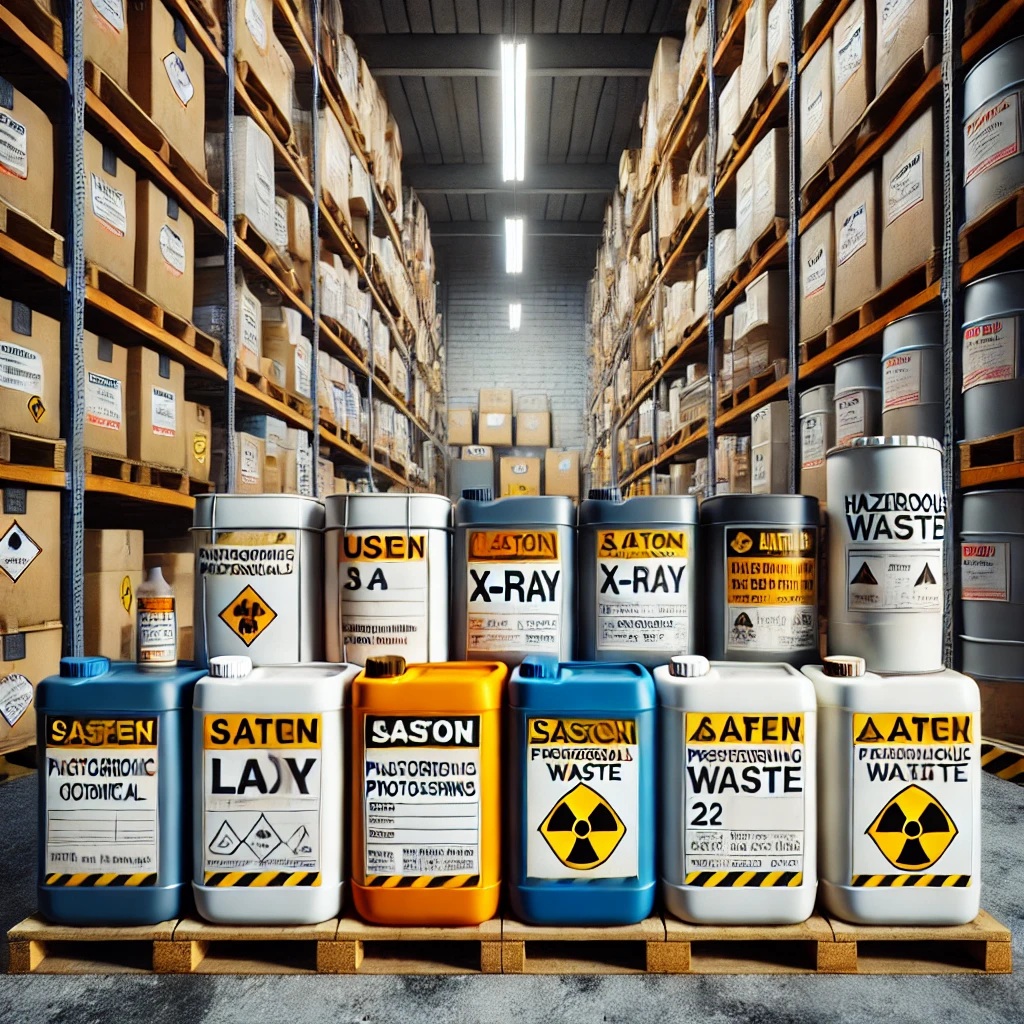
Photochemical substances (code 20 01 17*) have been widely used in printing, medical imaging, and photography, but after use, they can pose significant environmental hazards. These substances contain silver, various solvents, acids, and other toxic components that, if improperly handled, may contaminate water and soil.
Effective hazardous waste management for photochemical substances requires proper identification, collection, and subsequent recycling. This helps minimize the harmful effects of toxic chemicals on the environment and prevents heavy metals from entering ecosystems.
The main types of hazardous photochemical waste include:
- used film developers and fixers
- spent chemicals from the printing industry
- medical X-ray processing fluids
- photochemical concentrates with high silver content
Proper hazardous waste handling of photochemical substances requires strict control and specialized approaches. It is important to separate used chemicals and prevent their mixing, as this could lead to the formation of new toxic compounds.
Hazardous waste storage for photochemical substances must be done in sealed containers that prevent the evaporation of harmful chemicals. All containers must be labeled according to safety and environmental standards.
Hazardous waste transportation for photochemical waste must be carried out by specialized companies licensed to transport toxic liquids. The use of leak-proof containers is essential to avoid spills.
Hazardous waste recycling of photochemical waste focuses on extracting valuable metals such as silver while neutralizing aggressive chemical components. Modern technologies allow for the efficient recovery of valuable resources from such waste.
Environmental servicing for businesses that use photochemical substances ensures the safe storage and recycling of these materials. This includes implementing internal regulations, training personnel, and monitoring compliance with environmental standards.
The main risks of improper hazardous waste handling in this category include:
- heavy metal contamination of water bodies and soil
- air pollution from toxic vapors
- risk of chemical burns if exposed to concentrated solutions
- fire hazards due to improper storage of certain chemicals
Adhering to environmental regulations and utilizing modern hazardous waste recycling methods helps minimize risks and make this process safe for the environment.