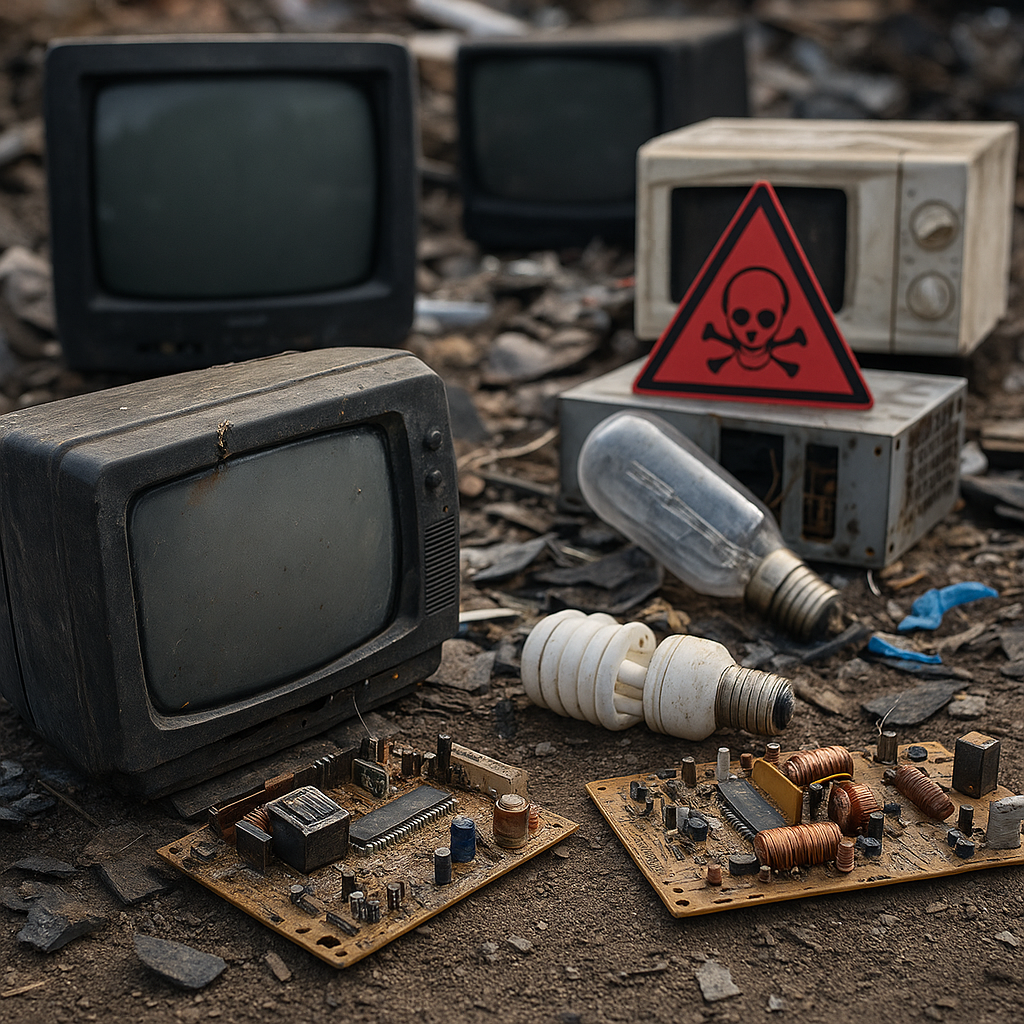
Electrical and electronic equipment containing hazardous components (16 12 39)* includes outdated computers, monitors, batteries, and circuit boards with mercury, lead, cadmium, or other toxic substances.
Hazardous waste management starts with identifying hazardous components for special handling.
Handling of hazardous waste requires isolating mercury, cadmium, and lead-containing parts prior to processing.
Environmental servicing of enterprises includes:
- sorting components by hazard class
- monitoring storage integrity
- reporting on waste volumes and composition
Storage of hazardous waste should be in sealed, ventilated areas with restricted access.
Transportation of hazardous waste requires sealed containers to prevent leaks and breakage.
Processing of hazardous waste involves dismantling, chemical treatment, and safe material recovery.
Key risks include:
- contamination of soil and water with heavy metals
- toxic emissions during improper dismantling
- explosions from capacitors or batteries
Safe handling of hazardous waste minimizes environmental and health risks.
Consistent environmental servicing of enterprises ensures compliance with environmental law and corporate responsibility.