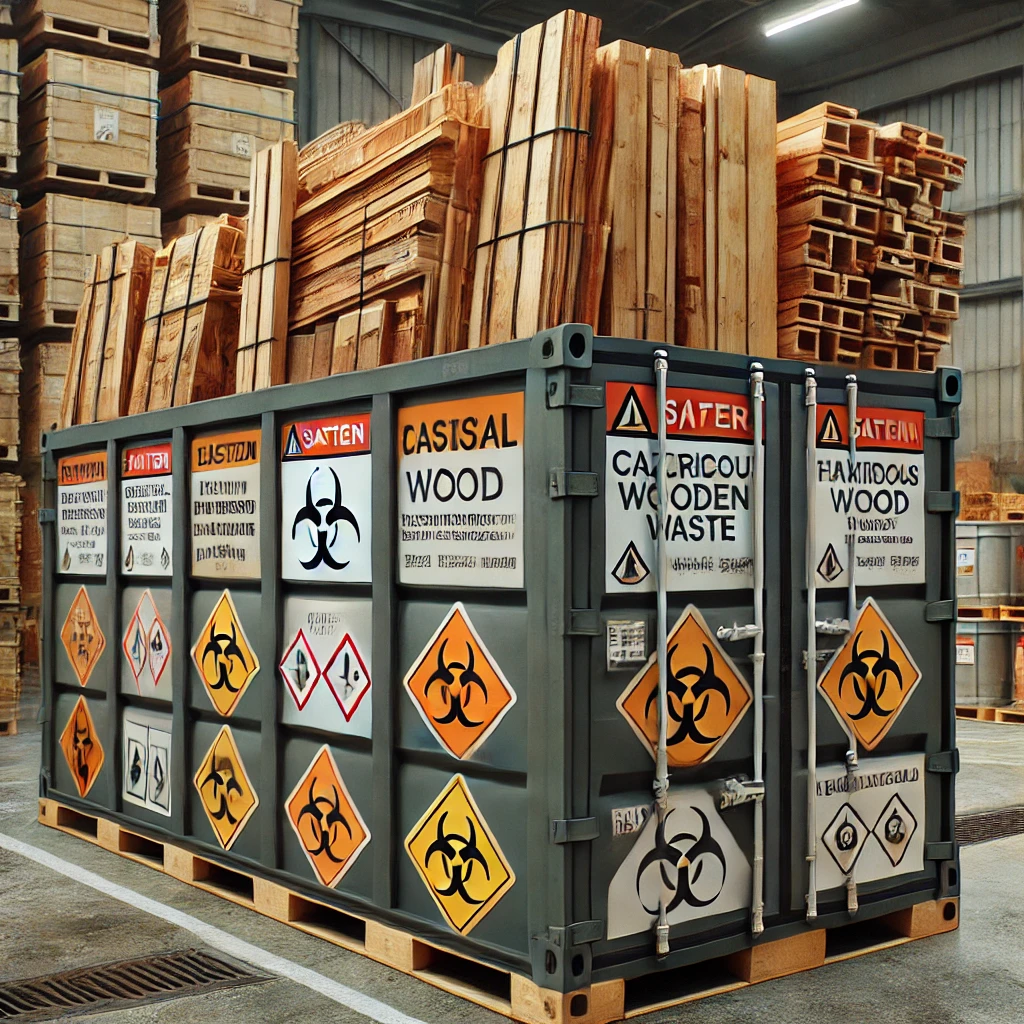
Wood and wooden materials containing hazardous substances (code 19 12 06*, 20 01 37*) fall under a special waste category that requires specific handling procedures. These materials may contain paint residues, preservatives, heavy metals, and other toxic compounds that pose environmental risks.
Effective hazardous waste management for this category includes proper sorting, monitoring storage areas, and utilizing specialized recycling methods. This helps reduce air, soil, and water pollution risks.
The main types of hazardous wooden waste include:
- construction wood treated with chemical preservatives
- furniture and wooden structures coated with toxic paints or varnishes
- wooden panels containing formaldehyde and other harmful compounds
- wood waste treated with antiseptics and fire-retardant chemicals
Proper hazardous waste handling of these materials requires chemical analysis to determine the safest disposal method. Improper handling can release toxic substances into the air or contaminate groundwater.
Hazardous waste storage for wooden materials should be conducted in closed facilities or sealed containers to prevent moisture absorption and toxic emissions. Open-air storage should be avoided, especially near drinking water sources.
Hazardous waste transportation for wooden materials must be done in sealed containers with proper labeling. This prevents hazardous dust and vapor emissions into the environment.
Hazardous waste recycling for wood includes mechanical shredding, thermal treatment, or chemical neutralization of toxic components. In some cases, treated wood can be repurposed for industrial or construction use.
Environmental servicing for enterprises working with wooden materials should focus on reducing the use of toxic substances, ensuring material safety, and implementing effective waste management strategies.
The main risks of improper hazardous waste handling for wooden materials include:
- toxic emissions into the air during burning or decomposition
- contamination of water sources with hazardous chemical residues
- soil degradation due to improper storage or material breakdown
- negative health effects from inhaling harmful vapors
Using modern hazardous waste recycling methods helps reduce environmental damage and ensures safe processing of contaminated wooden materials.