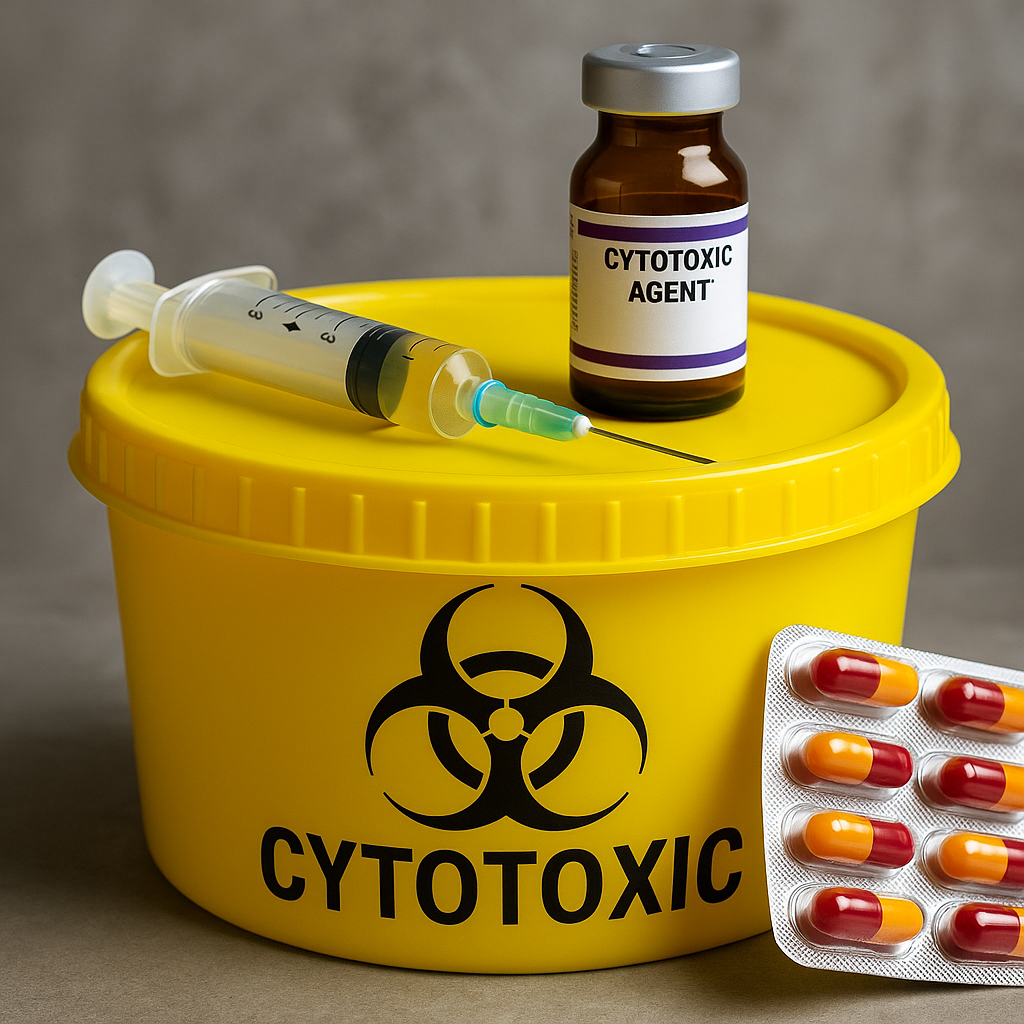
Cytotoxic and cytostatic drugs (18 01 08, 18 02 07)* are used in chemotherapy and pose severe risks due to their mutagenic and carcinogenic properties. They are considered highly hazardous waste.
Hazardous waste management requires documentation and classification immediately upon identification of the substance.
Handling of hazardous waste includes:
- isolating the waste from other materials
- using double packaging
- labeling for toxicity and access restriction
Environmental servicing of enterprises in healthcare must involve:
- staff training in handling hazardous pharmaceuticals
- internal tracking and waste accounting
- compliance audits
Storage of hazardous waste requires:
- sealed, labeled containers
- refrigeration or controlled temperature
- secured areas with limited access
Transportation of hazardous waste must be carried out by licensed carriers using:
- shock-resistant packaging
- regulatory documentation
- contamination control measures
Processing of hazardous waste uses methods like high-temperature incineration or chemical neutralization in specialized facilities.
Main risks include:
- accidental exposure to staff
- contamination of surfaces and drains
- reactive degradation during improper storage
Safe handling of hazardous waste requires precise standards, certified operators, and ongoing monitoring.
Environmental servicing of enterprises in the medical sector ensures compliance, health protection, and ecological safety.