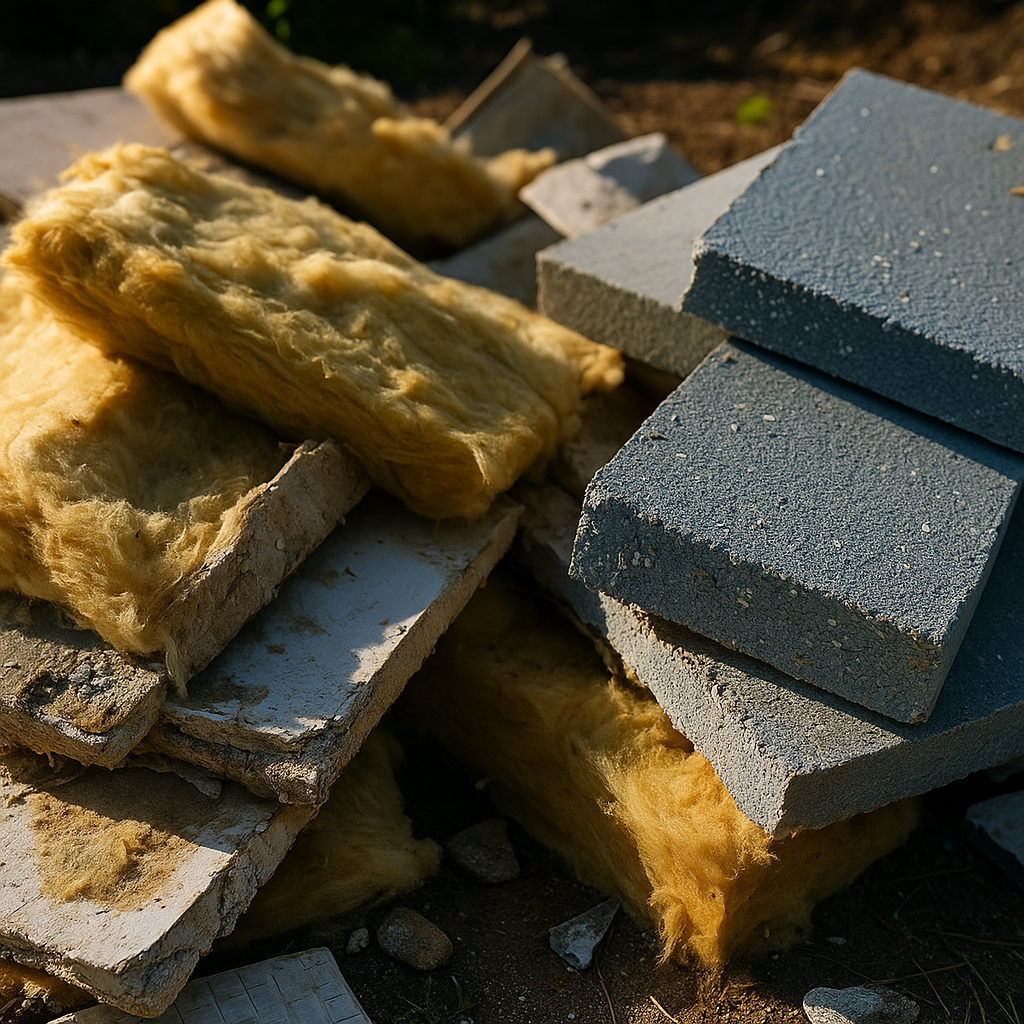
Insulation materials classified as hazardous waste (code 16 12 28*, 17 06 03*) pose serious environmental and safety risks during construction, demolition, or renovation. These include mineral wool, polystyrene foam, polyurethane foam, and others containing asbestos, freons, or heavy metals.
Hazardous waste management in this context demands a structured approach. Many materials cannot be properly identified without lab analysis, complicating separation.
Health risks stem from: microscopic fibers entering the lungs; toxic fumes when heated; chemical instability when mixed with other debris.
Enterprises should ensure:
- storage of hazardous waste: in sealed, clearly marked containers;
- transportation of hazardous waste: by licensed companies only;
- handling of hazardous waste: under strict environmental and safety standards.
Environmental servicing of enterprises should involve staff training on hazardous materials.
Recycling such waste is often limited and requires advanced technology. If reuse is not feasible, materials must be sent to specialized facilities.
Avoid burning or shredding insulation containing hazardous components without prior analysis — this could release carcinogens.
Potentially hazardous insulation types include:
- foamed polymers: contain halogenated compounds;
- mineral wool: may be soaked in toxic binders;
- old insulation mats: could contain heavy metals.
Comprehensive hazardous waste handling is both a responsibility and a legal requirement.