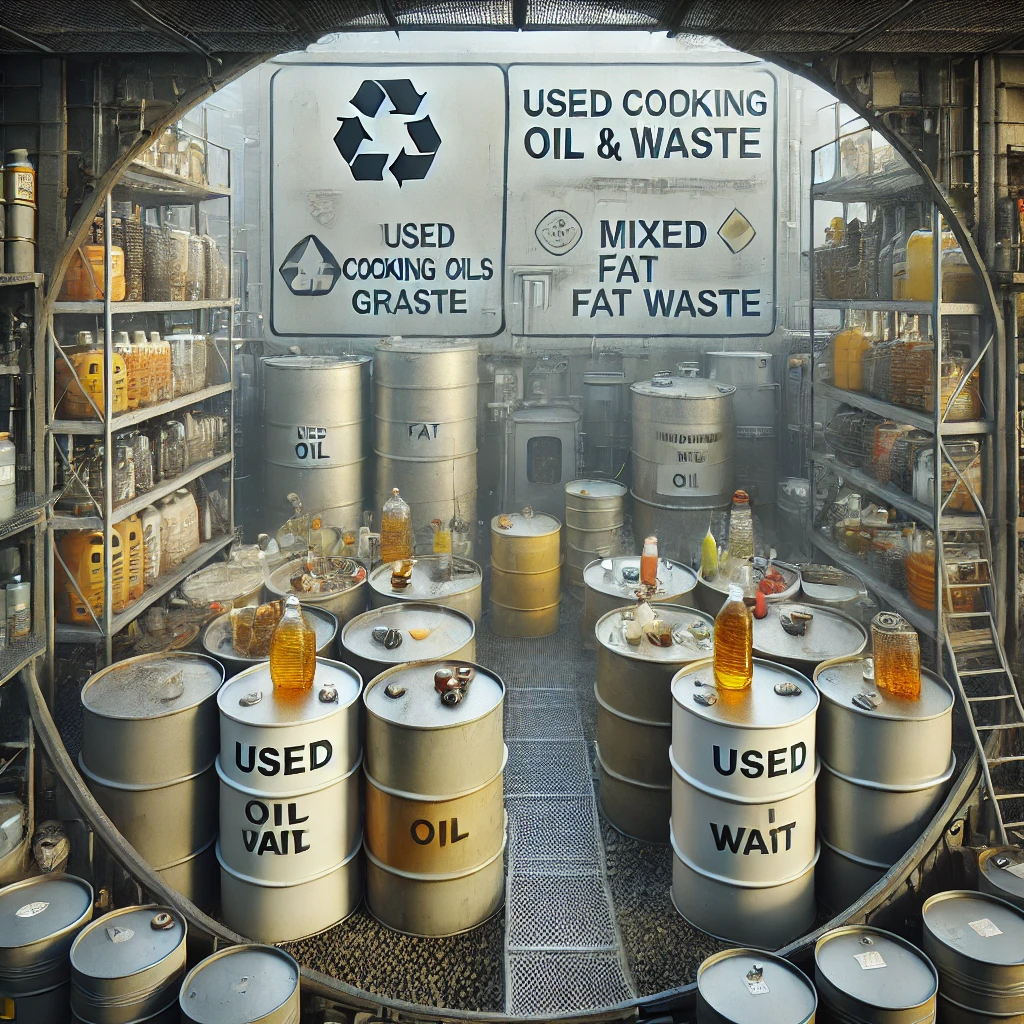
Oil and fat waste pose (not specified under code 20 01 25*) a serious environmental problem if proper hazardous waste management is not implemented. These substances may contain toxic impurities, have high organic pollutant concentrations, and lead to water and soil contamination.
Proper hazardous waste handling, including used oils and fats, involves collection, storage, and further recycling. Improper disposal into sewage systems can clog pipes and pollute water sources.
This category of waste includes:
- food fats and used vegetable oils
- industrial oils used in manufacturing processes
- residual fats from food service enterprises
- mixed fat and oil waste from other industries
Hazardous waste storage must be conducted in leak-proof, oxidation-resistant containers to prevent spills and environmental contamination.
Hazardous waste transportation for oil and fat waste requires certified transport companies with the proper permits. Strict adherence to environmental safety standards is necessary.
Hazardous waste recycling for oils and fats reduces environmental impact. Some used oils are converted into biofuels, while fats can be repurposed into industrial lubricants.
Environmental servicing for businesses includes implementing collection and recycling programs to reduce pollution and optimize resource reuse.
Key risks of improper oil and fat waste handling include:
- water contamination from grease entering sewage systems
- pipe blockages from fat buildup
- fire hazards from large volumes of stored oil
- sanitation issues due to odors and pest attraction
Modern recycling technologies help mitigate environmental risks and promote sustainable resource use.