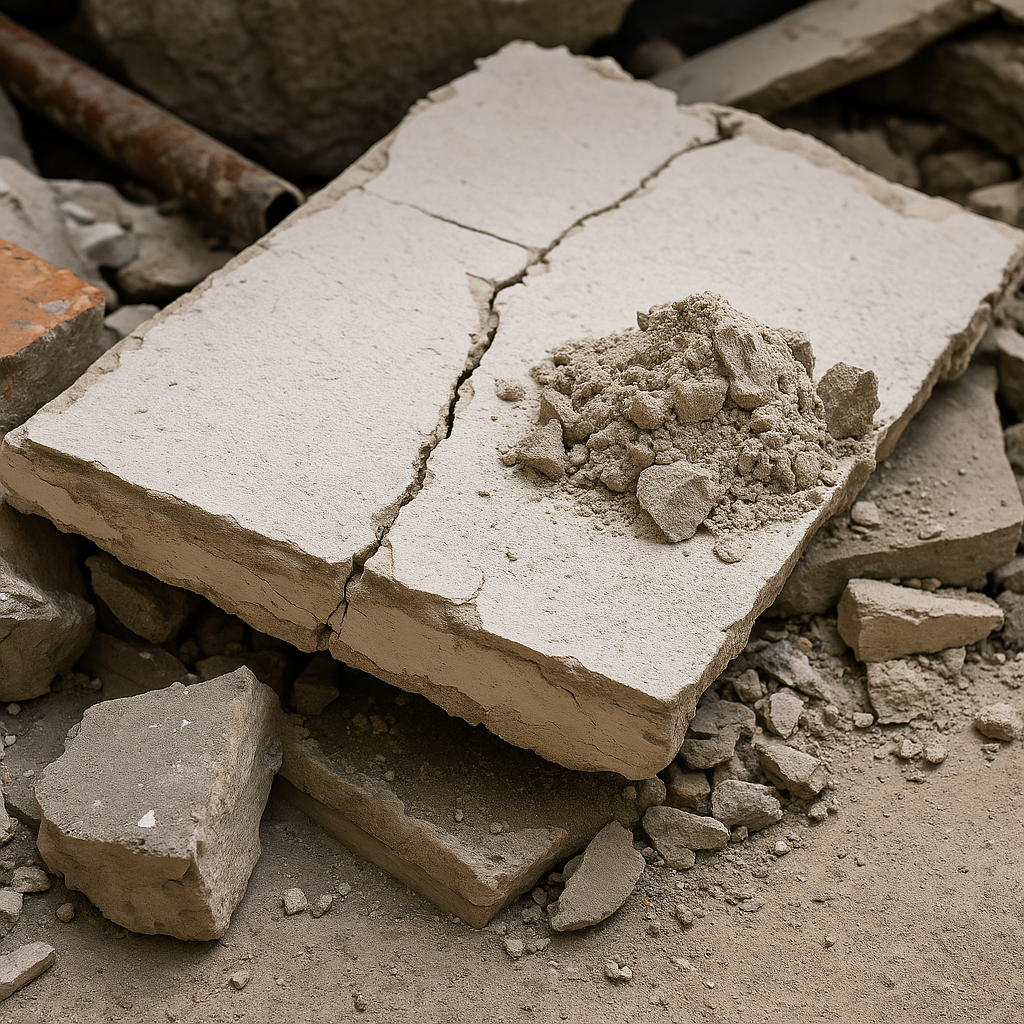
Gypsum-based construction materials containing hazardous substances (code 16 12 31*, 17 08 01*) pose a significant challenge in the field of hazardous waste management and environmental safety.
Such materials may include dangerous compounds, such as heavy metals, asbestos, or toxic-emitting agents. Therefore, proper handling of such hazardous waste must be monitored at every stage.
The first step is identifying the composition and classifying the waste. This helps assess potential risks to human health and the environment. Involving specialists in enterprise environmental services ensures that an effective strategy is implemented.
Hazardous components in gypsum-based materials may include:
- paint residues: containing lead or mercury
- adhesive residues: based on formaldehyde compounds
- fire-resistant coatings: with asbestos fibers
Storage of hazardous waste should take place in sealed, weather-protected zones with clear labeling and documented inventory of each batch.
Transportation of gypsum-related hazardous waste is allowed only via certified transport following ADR regulations. Route documentation is equally important.
The processing of hazardous waste is carried out in specialized facilities, where the gypsum is purified and toxic components are extracted using thermal or chemical treatment.
Hazardous waste management in enterprises requires not only technical infrastructure but also training of personnel, process audits, and consistent monitoring.
For businesses in construction, demolition, or renovation, environmental servicing of enterprises is an integral part of sustainable development.
Therefore, handling gypsum-based hazardous waste demands a coordinated, responsible approach aligned with all relevant environmental standards.