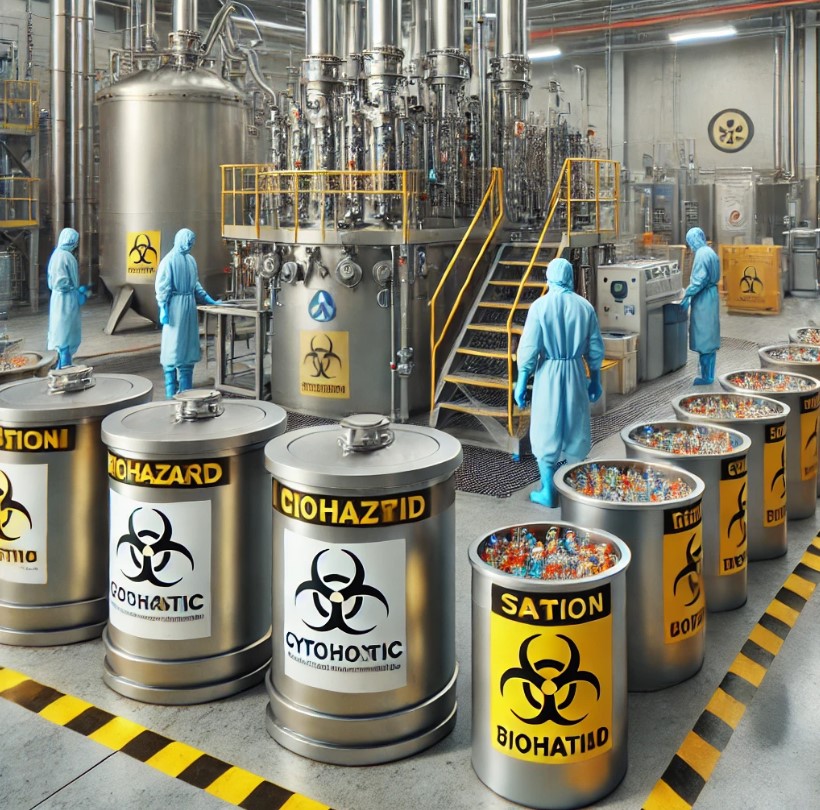
Cytotoxic and cytostatic medications (code 20 01 31*) are used in oncology therapy and some other medical procedures, but their residues and waste pose a serious threat to the environment and human health. They may contain toxic substances that affect cell division and cause mutations, making improper storage or disposal a risk for both medical personnel and the environment.
Hospitals and medical institutions must comply with strict regulations for handling such waste. Residues of cytotoxic drugs, used needles, ampoules, and packaging must be stored in special sealed containers marked with appropriate hazard symbols. This helps prevent accidental contact with hazardous substances and reduces the risk of these substances entering the environment.
Companies manufacturing cytotoxic medications also face the challenge of efficiently managing production waste. During the synthesis and packaging of drugs, both liquid and solid waste containing active toxic components is generated. Specialized environmental service companies collaborate with manufacturers, offering solutions for the safe transportation and disposal of such waste.
An essential aspect of environmental safety is maintaining clean water resources. If cytostatic compounds enter wastewater, they can have a detrimental effect on aquatic flora and fauna. Therefore, hospital drainage systems must be equipped with efficient filtration installations that neutralize hazardous chemical compounds before the water is discharged into the sewage system.
For personnel handling cytotoxic waste, proper training is crucial. They must understand how to handle hazardous materials correctly, use personal protective equipment, and follow protocols for waste transportation. This significantly reduces the risk of occupational diseases and accidental intoxication.
One of the modern approaches to handling such waste is the automation of collection and sorting processes. The use of specialized equipment minimizes direct contact between personnel and hazardous materials, making the processes safer and more efficient.
Government control and regulatory requirements also play a key role in ensuring the safe management of this waste. Licensed companies responsible for transportation and disposal must strictly adhere to legal regulations, ensuring maximum protection for the environment and public health.
Special attention should be given to waste labeling and traceability. Each container with hazardous substances must be properly labeled, and all stages of its movement must be documented. This prevents illegal disposal or mishandling of hazardous materials.
Advancements in technology enable the development of new methods for decontaminating cytotoxic waste, reducing its environmental impact. Research in environmental chemistry focuses on finding effective ways to neutralize the active components of medications, significantly lowering pollution levels.
Responsible management of cytotoxic and cytostatic medications is not only a legal requirement but also a necessity for preserving the environment and human health. Cooperation between medical institutions, manufacturers, environmental services, and government authorities is key to creating an effective waste management system that will minimize risks for future generations.