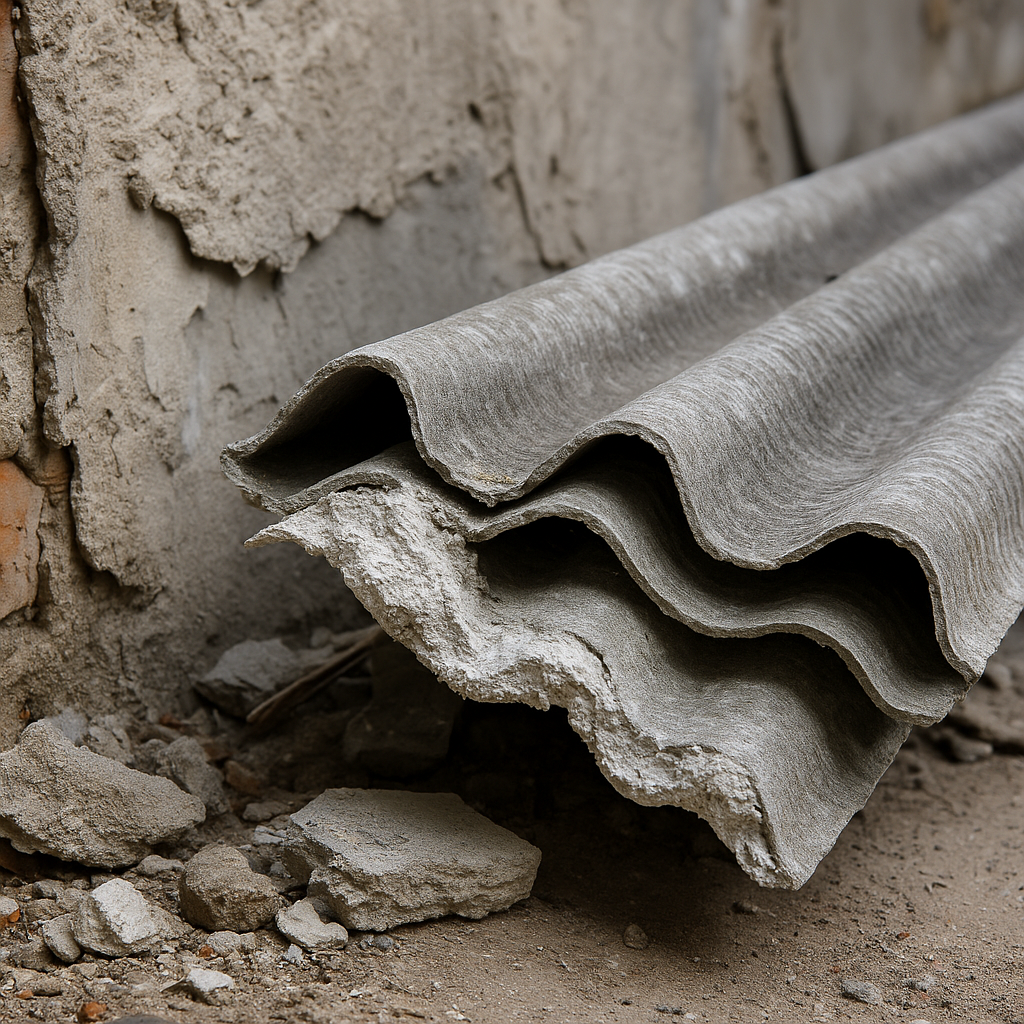
Construction materials containing asbestos (code 16 12 30*, 17 06 05*) belong to one of the most complex categories of hazardous waste. Improper dismantling, storage, or transportation can cause serious harm to human health and the environment.
These materials were widely used in the past due to their fire resistance and durability. Most commonly, they include: roofing sheets, pipes, thermal insulation boards, plaster, and adhesives. The issue lies in the fact that damaged or cut asbestos generates microscopic fibers that can enter the lungs.
Effective hazardous waste management involving asbestos requires control at every stage. The first step is mandatory identification of asbestos-containing materials before any demolition work begins. This helps prevent the accidental spread of fibers.
Professional hazardous waste handling on construction sites includes: using personal protective equipment, vacuum systems with air filtration, hermetic packaging, and proper labeling of materials before removal.
Proper storage of hazardous waste is critical. It must be done in sealed containers or air-tight polyethylene bags to avoid fiber dispersion.
Transportation of asbestos-containing hazardous waste must be carried out using specialized vehicles in compliance with ADR regulations, and drivers and personnel must undergo certified training.
Only licensed facilities are allowed to process this type of hazardous waste. They typically use high-temperature inertization or deep chemical neutralization.
During building renovations, preliminary assessments should be conducted. This allows for early detection of asbestos-containing materials and safe planning of ecological servicing by qualified contractors.
Hazardous waste management for asbestos must be transparent and regulated: waste passports, transportation routes, and acceptance records are mandatory.
Only a systematic approach and strict compliance with safety standards can ensure protection of both the environment and public health.