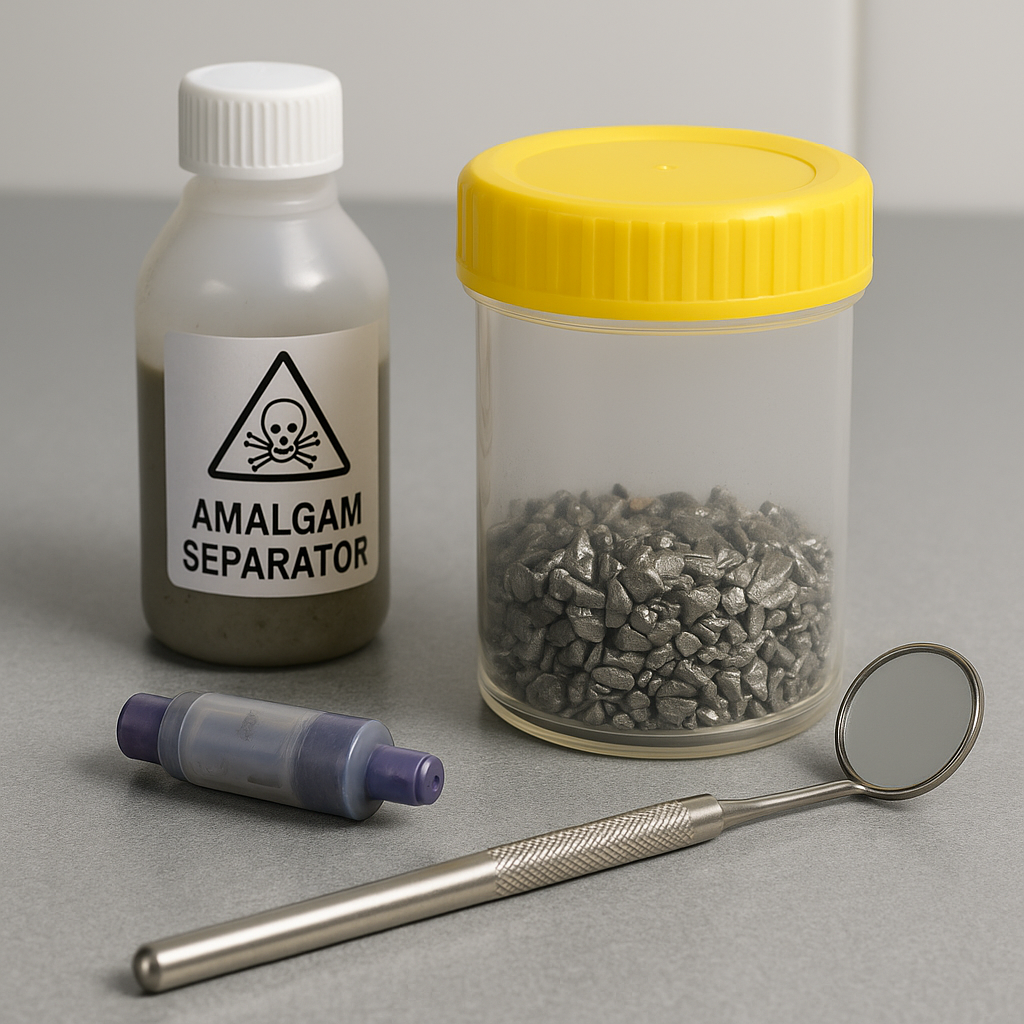
Amalgam waste from dental use (18 01 10)* is classified as hazardous due to mercury content. It arises from filling applications, removal of old fillings, and cleaning of amalgam separators and tools.
Hazardous waste management in dentistry starts with accurate identification, proper labeling, and sealed storage of all amalgam residues.
Handling of hazardous waste includes using leakproof containers, avoiding drain disposal, and wearing proper protection when collecting waste.
Environmental servicing for enterprises, including dental clinics, must involve:
- installation of amalgam separators
- recording waste quantities
- working with certified waste handlers
Storage of hazardous waste requires containers that are:
- chemically resistant and sealable
- temperature protected
- labeled and kept away from general waste
Transportation of hazardous waste must be conducted by licensed operators using approved containers and documentation.
Processing of hazardous waste usually involves mercury recovery via distillation, with residue neutralized following environmental standards.
Key risks include:
- mercury vapor exposure
- pollution of water systems
- health hazards to clinic staff
Safe handling of hazardous waste in dentistry is both a regulatory requirement and a health safeguard.
Consistent environmental servicing for enterprises, including small private practices, ensures compliance and protects community health.