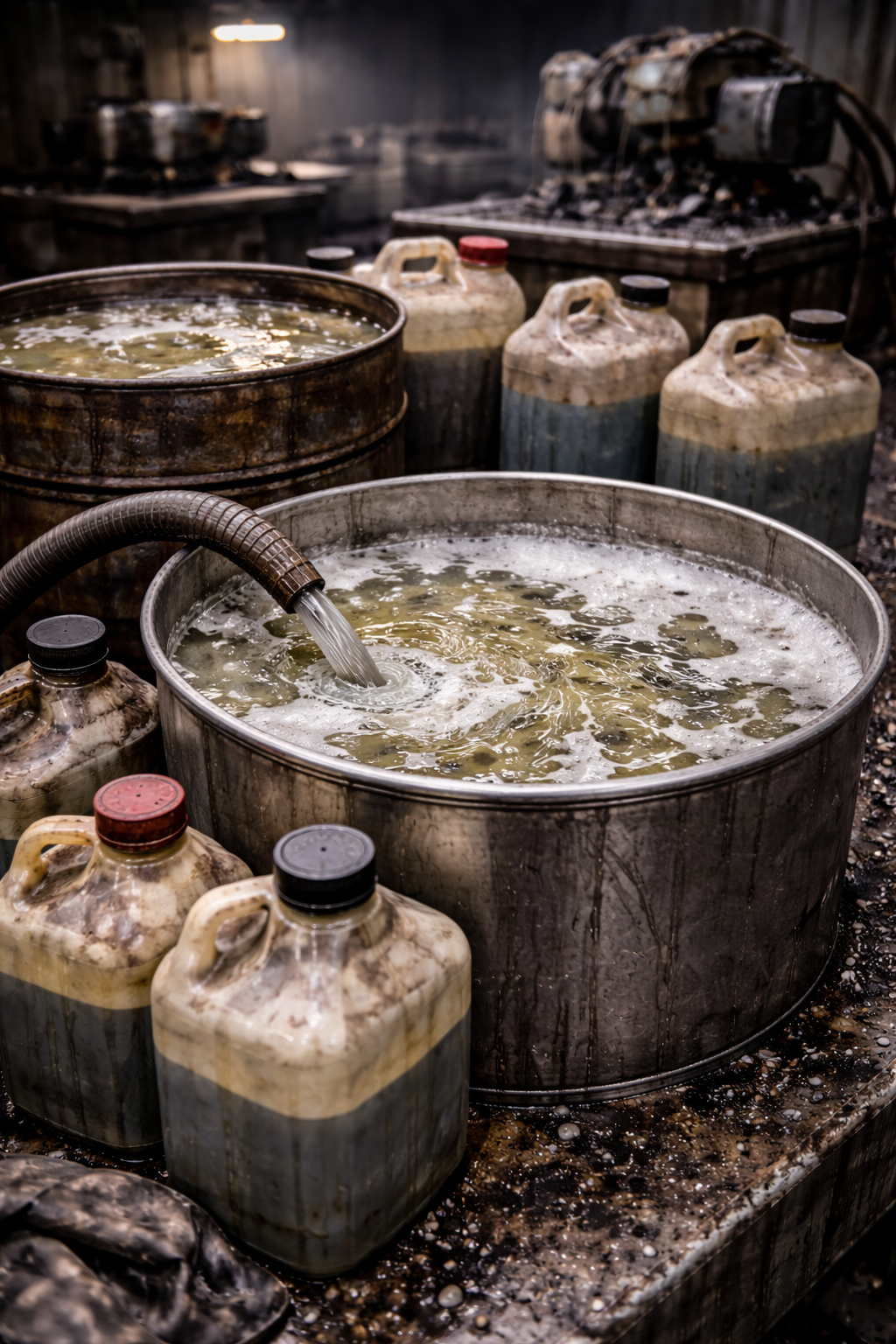
Non-chlorinated emulsions (code 13 01 05*) are used in hydraulic and lubrication systems as an alternative to chlorinated formulations.
They consist of a water phase, oil components, and specialized additives.
During operation, emulsions undergo physicochemical changes and accumulate metal particles.
Gradual contamination reduces their stability and performance.
Once operational efficiency is lost, these fluids become potentially hazardous waste streams.
Hazardous waste management is based on monitoring composition and contamination levels.
Regulated handling requires separation from other industrial liquids.
Special attention is required for storage of hazardous waste due to possible phase separation.
Key storage requirements include:
- closed tanks;
- monitoring mixture stability;
- prevention of leaks.
Transportation of hazardous waste considers the liquid structure of emulsions.
During transportation, the following measures are ensured:
- container tightness;
- protection from mechanical impact;
- proper documentation.
Recycling of hazardous waste focuses on reducing contaminant concentrations.
Technological methods help optimize industrial processes.
Environmental services include audits of emulsion use systems.
A systematic approach reduces industrial risks.