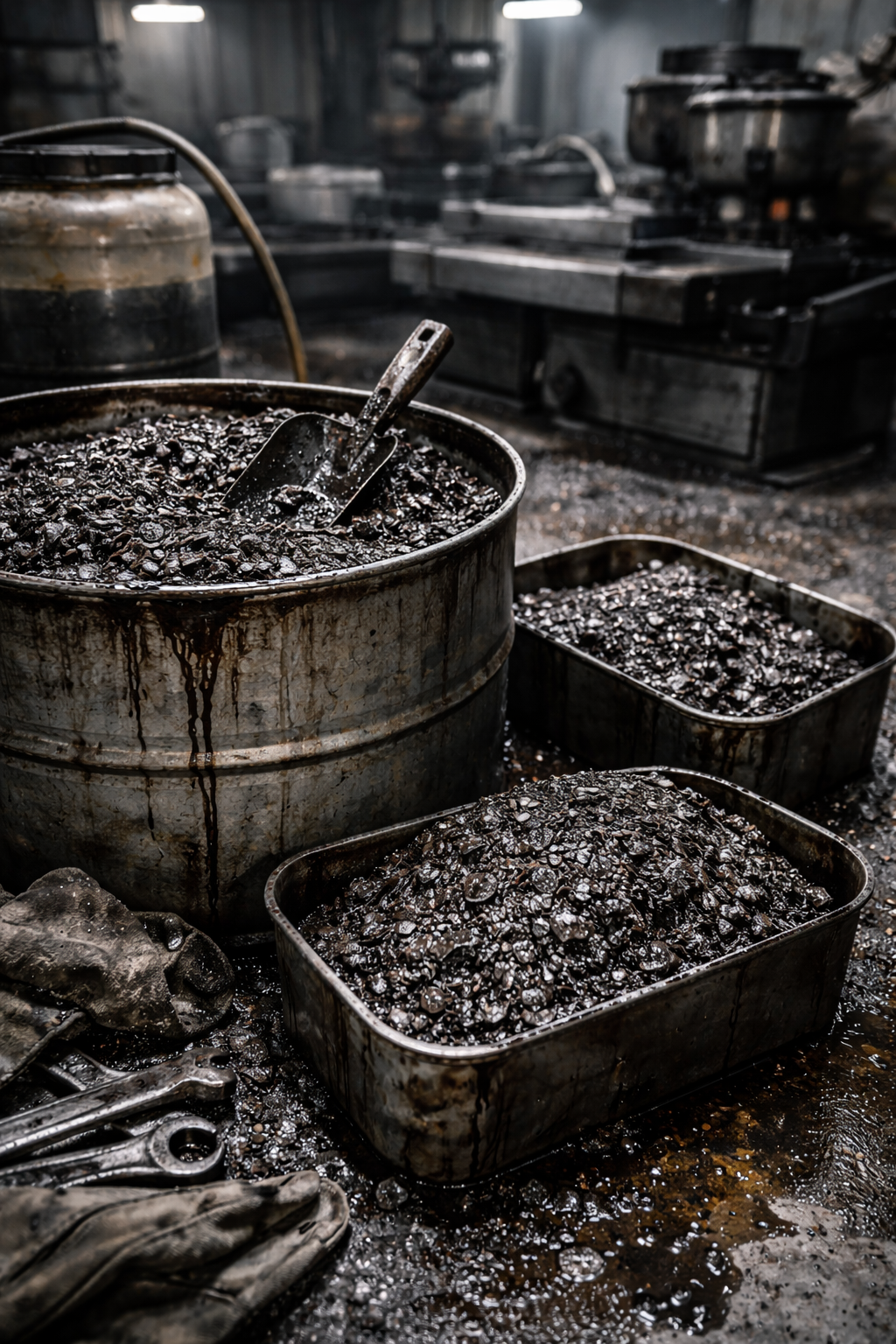
Metal sludges from grinding, honing, and lapping processes containing oils (code 12 01 18*) are generated during high-precision finishing operations in metalworking.
These sludges consist of fine metal particles, abrasive residues, and process oils used to reduce friction and dissipate heat.
A high oil content gives these materials a viscous structure and complicates further separation processes.
The presence of metals, tool wear products, and lubricant residues creates an increased environmental hazard.
Hazardous waste management for this category relies on accurate identification of sludge origin and control of solid-to-liquid phase ratios.
Proper handling of hazardous waste involves localizing sludge generation directly at machining areas.
Special attention is required for storage of hazardous waste, as oily sludges may spread and cause secondary contamination of production surfaces.
Key storage requirements include:
- use of sealed metal containers;
- prevention of oil phase leakage;
- placement on hard, impermeable surfaces.
Controlled transportation of hazardous waste ensures safe transfer of metal sludges to specialized processing facilities.
During transportation, the following measures are ensured:
- resistance of containers to vibration;
- preservation of container integrity;
- compliance with regulated handling procedures.
Recycling of hazardous waste in the form of metal sludges focuses on separating metal fractions and reducing oil content.
Technological processing methods help decrease accumulated volumes and optimize production flows.
Environmental services for enterprises play an important role by analyzing sludge composition and monitoring waste movement.
Systematic monitoring improves industrial environmental safety.
A rational approach supports stable and efficient production processes.