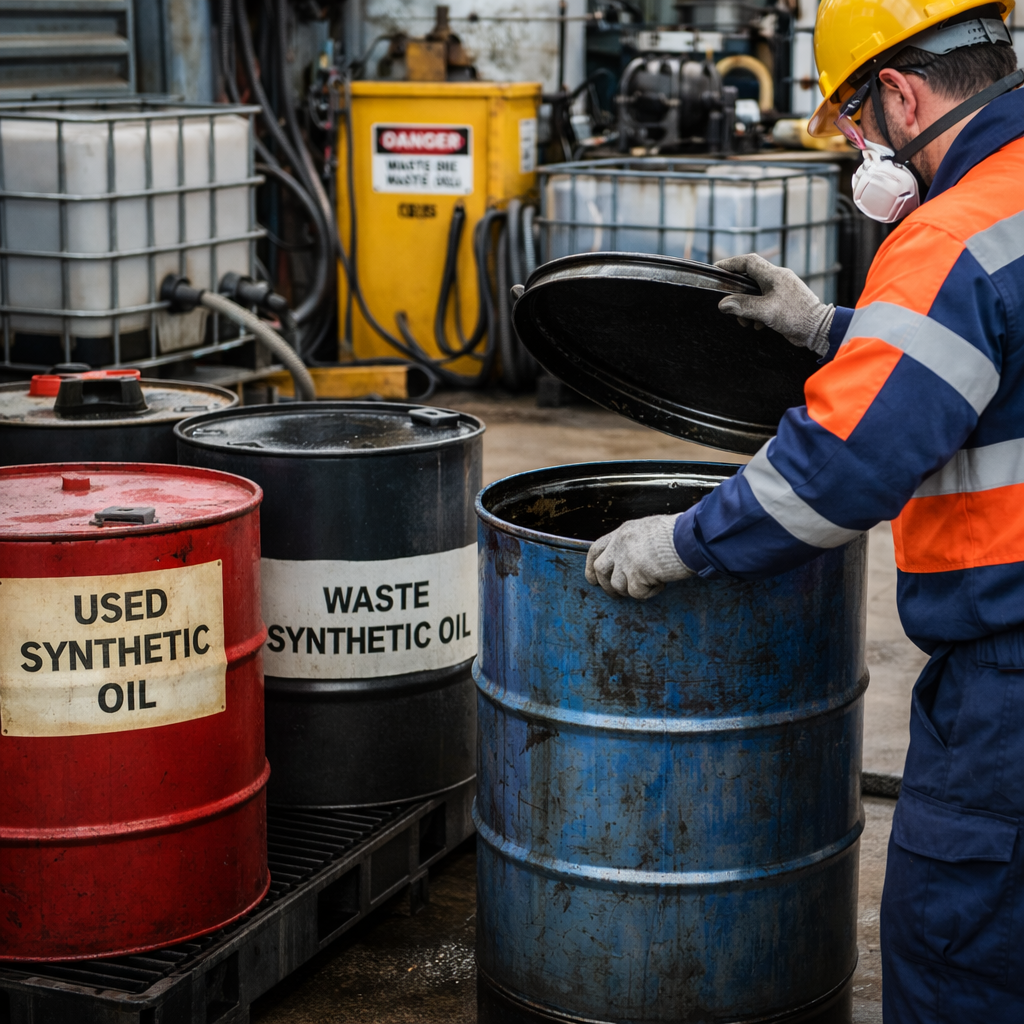
Synthetic motor, transmission and lubricating oils (code 13 02 06*) are generated during the operation of modern vehicles, industrial equipment and machinery. After use, these materials may present environmental risks.
Synthetic oils are widely used due to their high stability and long service life. During operation they accumulate metal particles and degradation products.
Therefore hazardous waste management becomes an essential part of environmental protection in industrial activities.
Effective hazardous waste handling requires monitoring generation, collection and transfer to processing facilities.
Main sources of waste include:
- vehicle servicing: replacement of synthetic engine oils
- industrial machinery operation: use of transmission oils
- equipment maintenance: cleaning mechanical components
Hazardous waste storage must be organized in sealed containers on protected areas.
Key storage requirements include:
- sealed containers: prevention of leaks
- container labeling: identification of waste types
- protected surfaces: prevention of soil contamination
Hazardous waste transportation must be carried out using specialized vehicles.
Hazardous waste transportation includes documentation for traceability.
Hazardous waste processing may include purification and regeneration technologies.
Environmental services for enterprises include waste audits and environmental monitoring systems.
A comprehensive management system includes:
- waste generation control
- safe collection
- transfer to specialized processing
Such practices reduce environmental risks and improve industrial sustainability.