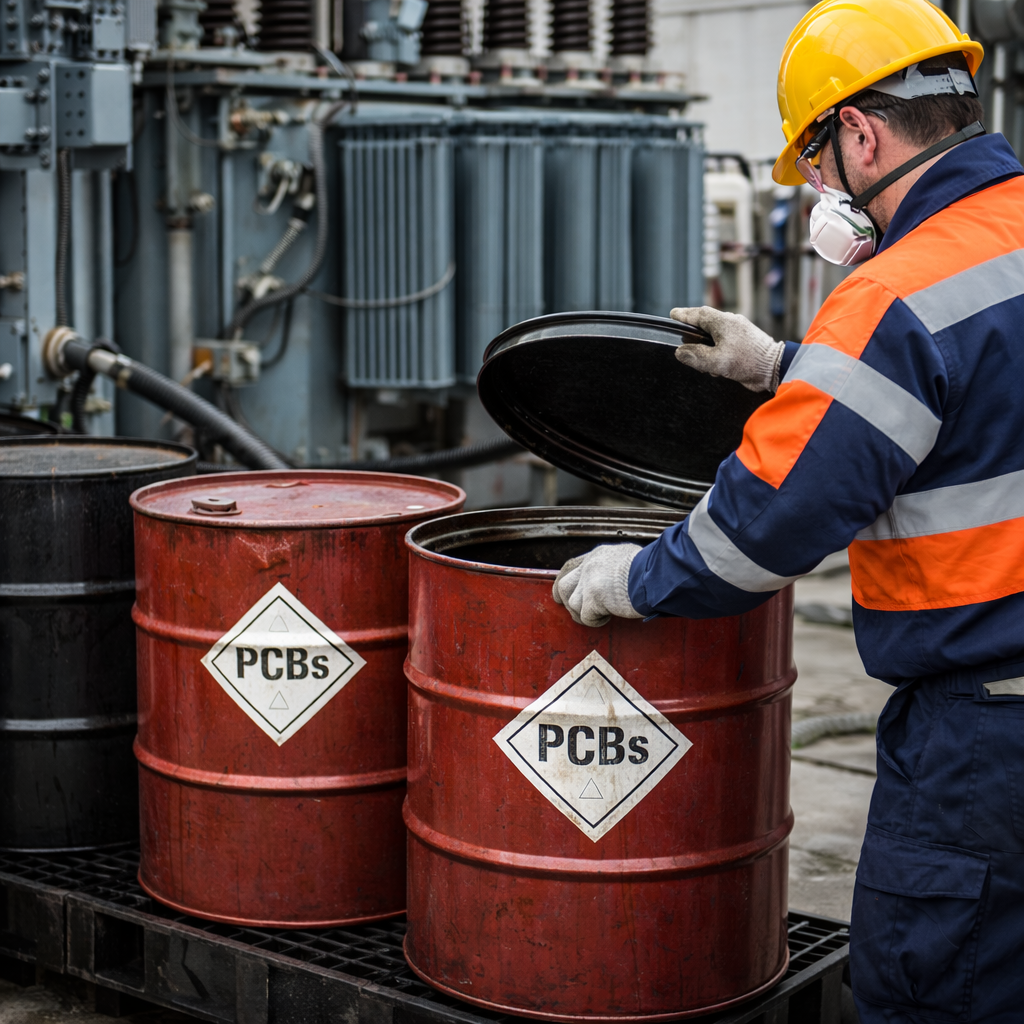
Insulating and heat-transfer oils containing PCBs (code 13 03 01*) belong to a category of highly hazardous industrial waste. These substances were historically used in electrical equipment because of their stability and insulating properties.
Polychlorinated biphenyls are persistent chemicals that can remain in the environment for long periods.Such oils were used in transformers, capacitors and other electrical systems.
Therefore hazardous waste management related to PCB-containing oils is essential for environmental protection.
Main sources of such waste include:
- dismantling of transformer equipment
- modernization of energy systems
- maintenance of electrical installations
Hazardous waste storage must be organized in sealed containers.
Key storage requirements include:
- sealed metal containers
- container labeling
- protected storage areas
Hazardous waste transportation must be carried out by specialized vehicles.Hazardous waste transportation includes documentation ensuring traceability. Hazardous waste processing involves specialized neutralization technologies.
Environmental services for enterprises include equipment audits and waste monitoring systems.
A comprehensive management system includes:
- waste generation control
- safe collection
- transfer to specialized processing
Such practices help reduce environmental risks and support sustainable industrial management.Companies that adopt modern approaches to hazardous waste management can significantly reduce the risk of environmental pollution.
The proper management of PCB-containing oils is an important step toward ensuring environmental safety and protecting natural resources.