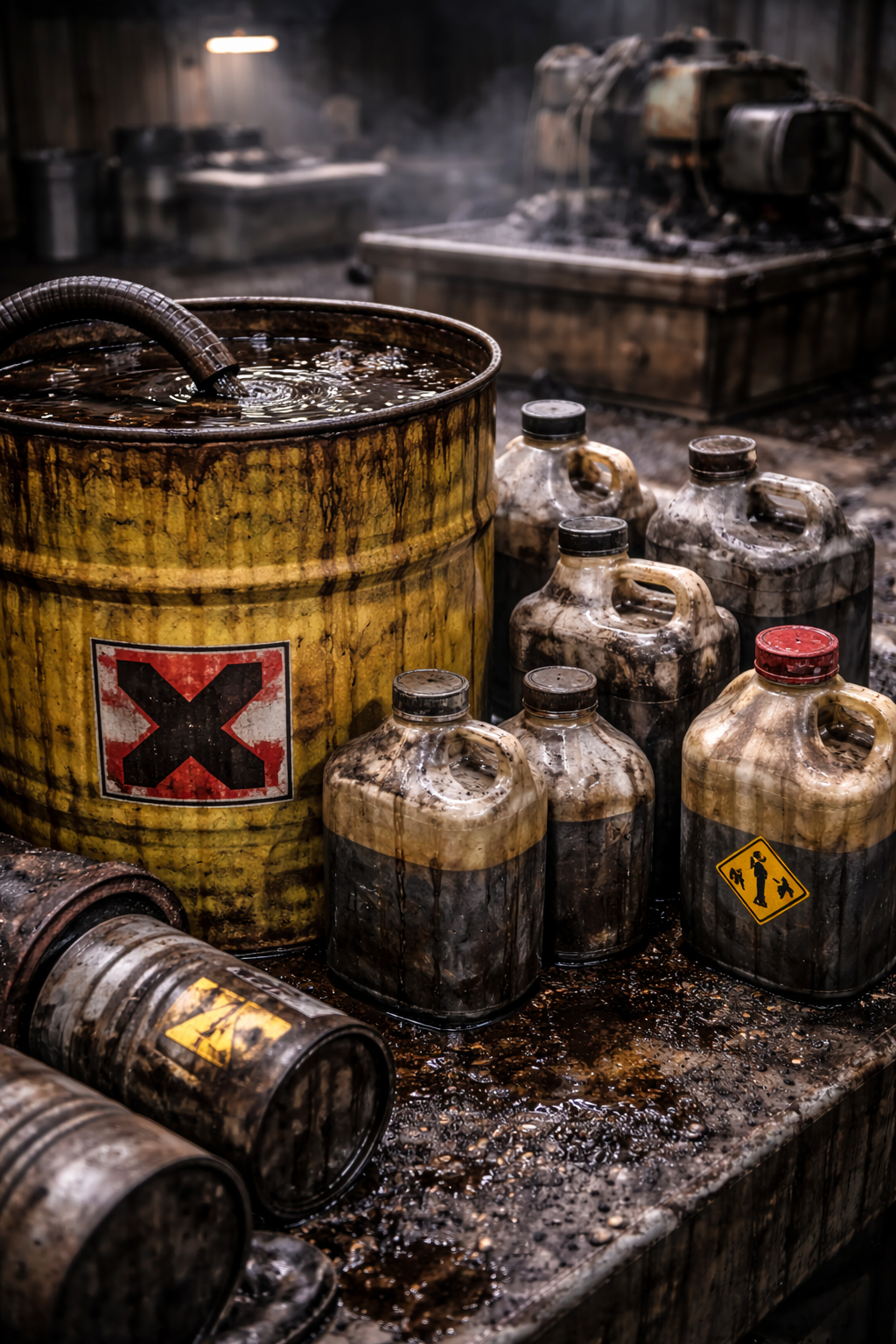
Hydraulic lubricants containing polychlorinated biphenyls (code 13 01 01*) were historically used in industrial hydraulic systems due to their high thermal stability.
Polychlorinated biphenyls ensured reliable equipment operation under high temperatures and loads.
However, these compounds are highly toxic and capable of bioaccumulation.
During operation, hydraulic oils accumulate degradation products and metal contaminants.
Leaks or improper handling pose serious environmental and health risks.
Hazardous waste management for this category requires strict control and identification of lubricant composition.
Regulated handling of hazardous waste excludes contact with soil, water, and air.
Special attention is required for storage of hazardous waste, as even minor leaks may have long-term effects.
Key storage requirements include:
sealed metal containers;
- physical isolation from other materials;
- continuous container condition monitoring.
- Transportation of hazardous waste is carried out considering the extreme toxicity of PCBs.
During transportation, the following measures are ensured:
- complete container tightness;
- minimized mechanical stress;
- specialized handling procedures.
Recycling of hazardous waste in this group focuses on complete neutralization of toxic components.
Specialized technologies prevent PCBs from entering the environment.
Environmental services for enterprises include hydraulic system audits and control of legacy oil stocks.
A systematic approach reduces long-term industrial risks.